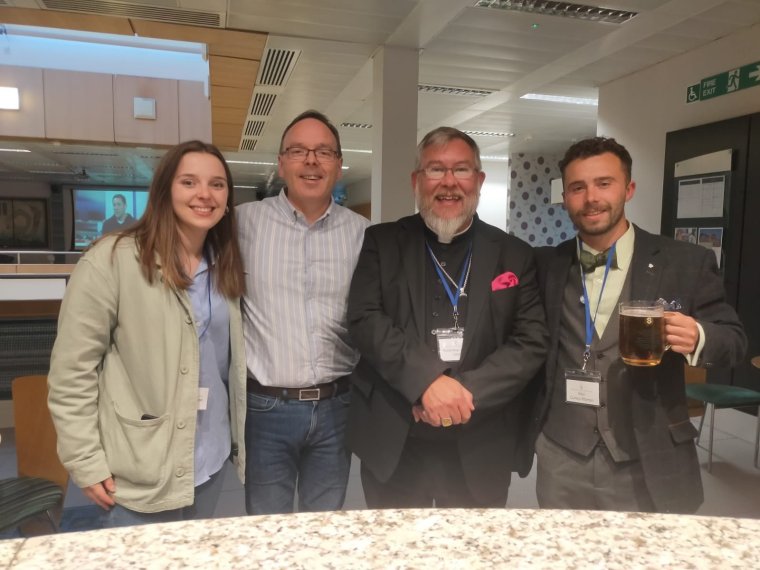
As we stand at the threshold of a new year, I extend my heartfelt blessings to each of you, the cherished flock of our apostolates. The turning of the year is a time of reflection and renewal, an opportunity given by God to reassess our spiritual journey and reaffirm our commitment to Him.
In the pursuit of holiness, let us remember that our faith is not just a practice for the Sabbath but a way of life. This new year, I exhort each of you to deepen your personal piety and steadfastness to orthodox doctrine and praxis. Our faith, rooted in the timeless teachings of the Church, must be the guiding star in every aspect of our lives – not only within the walls of our churches but also in our workplaces, in our neighborhoods, and most importantly, within our families. It is within the domestic church, the family, where our faith often finds its richest expression and most profound test.
The new year custom of making resolutions offers us a valuable tradition for our spiritual lives. I encourage each of you to resolve to be more faithful, more dutiful, and more pious. Let this resolution not be a mere fleeting intention, but a firm commitment to spiritual growth and a more profound love for God and neighbor.
To be faithful is to adhere unwaveringly to the teachings of our Lord and His Church, to participate regularly and reverently in the Sacraments, and to immerse oneself in the life of prayer and the study of Sacred Scripture.
To be dutiful is to recognize our responsibilities – to our families, our communities, and our Church – and to fulfill them with love, zeal, and a sense of service, remembering always that in serving others, we serve Christ Himself.
To be pious is to cultivate a deep, personal relationship with God, nurturing a spirit of humility, gratitude, and charity in all our actions and interactions.
As we step into this new year, let us do so with a renewed sense of purpose and dedication. Let our light shine before others, so that they may see our good works and give glory to our Father who is in heaven (Matthew 5:16). May our lives be a testament to our faith, drawing others closer to the truth and love of Christ.
May the Lord bless you and keep you throughout this new year. May He make His face shine upon you and be gracious to you. May the Lord lift up His countenance upon you and give you peace.
I.X.
Brichtelmestunensis S. Silvestri Papæ et Conf. MMXXIII A.D.
Oremus
Suscipe, Domine, universam meam libertatem, Accipe memoriam, intellectum atque voluntatem omnem. Quidquid habeo vel possideo mihi largitus es; id tibi totum restituo, ac tuae prorsus voluntati trado gubernandum. Amorem tui solum cum gratia tua mihi dones, et dives sum satis, nec aliud quidquam ultra posco. Amen
Receive, O Lord, all my liberty. Take my memory, understanding, and entire will. Whatever I have or possess Thou hast bestowed upon me; I give it all back to Thee and surrender it wholly to be governed by Thy Will. Give me love for Thee alone along with Thy grace, and I am rich enough and ask for nothing more. Amen.
Please note that all material on this website is the Intellectual Property (IP) of His Grace, the Titular Archbishop of Selsey and protected by Copyright and Intellectual Property laws of the United Kingdom, United States and International law. Reproduction and distribution without written authorisation of the owner is prohibited.
May the peace and blessings of our Lord Jesus Christ be with you this Christmas season. As we gather to celebrate the birth of our Savior, let us reflect on the profound mystery of the Incarnation, where God, in His infinite love, humbled Himself to take on human flesh.
In Jesus Christ, we see the personification of divine love. God, who is Love itself, chose to enter into our broken and fallen world, to share in our humanity, and to reveal to us the depth of His love. This self-emptying act of God’s love is a testament to His immense compassion and His desire to bridge the gap between the divine and the human.
The Incarnation reminds us that true love is sacrificial in nature. It is not self-seeking or self-serving, but rather, it seeks the good of the other above all else. God’s love for us is an embodiment of this sacrificial love, in Christ, who willingly offered Himself upon the cross for the salvation of humanity. This act of ultimate sacrifice demonstrates the depths to which God is willing to go to express His love for us.
As children of God, we are called to imitate this sacrificial love in our own lives. Just as God gave us the gift of life and free will, we are called to use these gifts to love and serve Him and others selflessly. True love requires us to put aside our own desires and preferences, and to prioritize the needs of others. By sacrificing ourselves for the sake of God’s will, we participate in the divine love that was made manifest in Jesus Christ.
In these times, where the world often seems shrouded in uncertainty and turmoil, the message of Christmas shines as a beacon of hope, love, and peace. The birth of Christ in the humble setting of a manger in Bethlehem is a reminder to us all of the simplicity and purity at the heart of our faith. It is a call to return to the essentials of our belief – love for God and love for one another.
This Christmas, let us remember that our Lord Jesus Christ came into this world not in grandeur and opulence but in humility and simplicity. He chose to be born not among the powerful and privileged but among the meek and the marginalized. This profound act of humility is a lesson for us all to embrace simplicity and to find Christ in the least of our brothers and sisters.
In the spirit of the season, I encourage each one of you to extend your hand in generosity and kindness to those in need. Let the love of Christ manifest through our actions, as we feed the hungry, clothe the naked, comfort the sorrowful, and welcome the stranger. In doing so, we not only honor the memory of Christ’s birth but also embody His living presence in our world.
During this holy season, let us reflect on the immense love that God has shown us through the Incarnation. Let us strive to imitate this love in our relationships with others, by sacrificing ourselves for their well-being. In doing so, we not only honor the example set by our Lord, but we also draw closer to the divine nature that resides within us.
Let us also take this time to strengthen our family bonds, renew our friendships, and forgive past transgressions. The family, as the domestic church, plays a crucial role in our faith, mirroring the love and communion of the Holy Trinity. Cherish these moments together, united in prayer and love, as we recall the Holy Family of Nazareth and their unwavering trust in God’s plan.
May the joy and peace of Christmas fill your hearts and homes this season. May the love that was born in the manger continue to guide and inspire you throughout the coming year. And may the grace of our Lord Jesus Christ, the love of God the Father, and the fellowship of the Holy Spirit be with you all.
I.X.
Brichtelmestunensis In Vigilia Nativitatis Domini MMXXIII A.D.
Oremus
Deus, qui nos redemptiónis nostræ ánnua exspectatióne lætíficas: præsta; ut Unigénitum tuum, quem Redemptórem læti suscípimus, veniéntem quoque Iúdicem secúri videámus, Dóminum nostrum Iesum Christum, Fílium tuum: Qui vivis et regnas cum Deo Patre, in unitáte Spíritus Sancti, Deus, per ómnia sǽcula sæculórum. Amen
O God, You Who gladden us year after year with the expectation of our redemption, grant that we, who now welcome with joy Your only-begotten Son as our Redeemer, may also gaze upon Him without fear when He comes as our judge, our Lord Jesus Christ: Who livest and reignest with God the Father, in the unity of the Holy Spirit, God, world without end. Amen.
Please note that all material on this website is the Intellectual Property (IP) of His Grace, the Titular Archbishop of Selsey and protected by Copyright and Intellectual Property laws of the United Kingdom, United States and International law. Reproduction and distribution without written authorisation of the owner is prohibited.
As we embark on the blessed season of Advent, a time of joyful anticipation, I greet you with a heart filled with hope and love. This sacred season holds a dual significance for us, as we prepare to commemorate the glorious Nativity of our Lord and also reflect upon the solemn reality of the Last Judgement.
Advent is a time of preparation, a call to humbly and eagerly await the coming of our Savior. We are reminded of the profound mystery of the Incarnation, where the Almighty God, in His infinite love and mercy, humiliated Himself to become a weak and vulnerable baby. This act of self-emptying demonstrates the depth of His love for us and invites us to embrace and manifest His love in our lives.
However, Advent is not only a time of joyful expectation; it also urges us to consider the Last Judgement. Just as Christ, in His humility, embraced our humanity, He will one day come to judge the living and the dead. This sobering reality calls us to examine our lives and ensure that we are living in accordance with God’s will.
We cannot ignore the deepening crisis of faith that plagues our Church and society. The prevailing culture of nihilism and greed, coupled with apathy and indifference to righteousness, has led many Christians to relegate their faith to the private sphere. It is crucial that we deliberately manifest the life of Christ in our own lives, becoming beacons of hope and love amidst the darkness.
In these troubled times, where conflicts between nations such as Russia and Ukraine, and Israel and Hamas in Gaza persist, let us remember that our call as Christians is not only to pray for peace but also to actively promote true justice. We must resist the temptation to adopt an “eye for an eye”1 approach, and instead, embrace the path of reconciliation and understanding.
While the number of voices seem to rise, with more and more people talking about the “end times”, discussing signs and portents, prophecies and visions, it is important for us to remember and reflect upon Our Lord’s own teaching2. In the midst of all these discussions and speculations, He reminds us not to worry about these things, but rather to focus on what truly matters – our salvation.
As we embark on this journey of Advent, I urge each one of you to engage in prayer and discernment. Let us open our hearts to God’s voice and seek His guidance in all aspects of our lives. It is through prayer that we find strength, clarity, and the wisdom to navigate the challenges that lie ahead.
In the midst of the busyness and distractions of this world, let us remember that our primary aim is to surrender our lives to God’s will, just as our Lord Jesus prayed in the Garden of Gethsemane, “Not my will but thine be done.”3 This surrender requires humility, trust, and a willingness to let go of our own desires and ambitions in order to align ourselves with the divine purpose for which we were created.
During this Advent season, I invite you to engage in fervent prayer, seeking the guidance of the Holy Spirit to discern God’s will for your lives. Let us also be attentive to the Word of God, allowing it to shape and transform us into vessels of His love and mercy. May we imitate the prophets, St. John the Baptist, St. Joseph, and the Blessed Virgin Mary, who humbly submitted themselves to God’s plan and became instruments of His grace.
As a family, let our apostolate embark on a journey of discussion and discernment in the coming year. Let us establish a Task Force to develop a pastoral strategy for the renewal of our mission communities, so that we may better embrace and manifest the love of Christ to all whom we encounter.
May this Advent season be a time of profound transformation and renewal for each one of us. May we prepare our hearts to welcome the Christ child with humility and joy, and may we always be ready to stand before Him with confidence when He comes again.
My dear brothers and sisters, let us hold onto the message of hope that Advent brings. Christ’s coming into the world reminds us that even in the midst of darkness, there is light. As we prepare for the commemoration of His birth, let us embrace this light and allow it to shine through us, manifesting the love and mercy of Christ in all that we do.
In conclusion, my dear brothers and sisters, let us approach this Advent season with hearts filled with hope and anticipation. May we prepare ourselves for the commemoration of the Nativity with joy and gratitude, while also heeding the call to humble ourselves before the coming of our Lord in judgement. May we surrender our lives to God’s will and strive to become vessels of His love and mercy.
May the grace and peace of our Lord Jesus Christ be with you all.
I.X.
Brichtelmestunensis In Vigilia S. Andreæ Apostoli MMXXIII A.D.
Oremus
Excita, quǽsumus, Dómine, poténtiam tuam, et veni: ut ab imminéntibus peccatórum nostrórum perículis, te mereámur protegénte éripi, te liberánte salvári: Qui vivis et regnas cum Deo Patre, in unitáte Spíritus Sancti, Deus, per ómnia sǽcula sæculórum. Amen
Put forth Your power, O Lord, we beseech You, and come, that with You as our protector we may be rescued from the impending danger of our sins; and with You as our deliverer, may we obtain our salvation. Who livest and reignest with God the Father, in the unity of the Holy Spirit, God, world without end. Amen.
Please note that all material on this website is the Intellectual Property (IP) of His Grace, the Titular Archbishop of Selsey and protected by Copyright and Intellectual Property laws of the United Kingdom, United States and International law. Reproduction and distribution without written authorisation of the owner is prohibited.
Bishop Josh Jaime, who serves as the episcopal administrator for the Old Roman apostolate in the Philippines, recently embarked on a journey from Manila to Cebu, a different island from the capital, to bestow his blessings upon a newly constructed and restored chapel. This significant undertaking was carried out by the devoted members of the community who have put in their time, effort, and resources to ensure the completion of this sacred space.
The island of Cebu holds significance as the birthplace of Christianity in the Far East. Presently, the Roman Catholic Archdiocese of Cebu, officially known as Archidioecesis Nominis Iesu o Caebuana, stands as the largest archdiocese in the Philippines and Asia. On Mactan Island in Lapu-Lapu, the Old Roman apostolate caters to the underprivileged residing in the urban sprawl, assisting a total of 8,481 households. Bishop Joash recently bestowed his blessings upon the newly established Mission Chapel in Likuan, Marigondon, dedicated to San Pedro Calungsod. San Pedro Calungsod was a Filipino-Visayan migrant, sacristan, and missionary catechist who, alongside Spanish Jesuit missionary Diego Luis de San Vitores, endured religious persecution and martyrdom in Guam in 1672 due to their missionary efforts.
The act of blessing this new chapel serves as a testament to the unwavering faith and devotion of the community, as they continue to uphold their religious traditions and strengthen their spiritual connection. The construction and restoration are a testament to the resilience and perseverance of the faithful, who have come together to create a sacred space that will serve as a beacon of hope and inspiration for generations to come. Blessing this chapel is a testament to the enduring power of faith and the importance of religious spaces in fostering a sense of community and spiritual growth.
Bishop Joash had the opportunity to visit not just one, but two Old Roman chapels in Cebu. The first chapel, which is part of a trio, has been meticulously restored and blessed. Additionally, a new priest’s convent has been added to enhance the spiritual atmosphere of the chapel. The second chapel, known as the Nuestra Virgen de la Regla Mission Chapel, is located in Ilaya, Marigondon, Lapu lapu City. This chapel holds great significance and has been a place of worship for many faithful followers. Bishop Joash’s visit to this chapel allowed him to witness the devotion and love that the community has for their faith. The restoration and blessing of the chapel, along with the addition of the priest’s convent, serve as a testament to the dedication and commitment of the people involved in preserving the religious heritage of the area. The Nuestra Virgen de la Regla Mission Chapel stands as a symbol of faith and spirituality, providing a sacred space for worship and reflection.
The revered depiction of Nuestra Virgen de la Regla holds great significance among the Cebuanos, who firmly believe that their prosperity is a divine blessing attained through the powerful intercession of the Virgin Mary. The veneration of Our Lady of the Rule originated from the actions of St. Augustine, the bishop of Hippo in Northern Africa. With his own hands, he skillfully carved an image of the Virgin Mary, which became one of the few relics to withstand the destruction of the city of Hippo. Following Augustine’s passing, the monks sought refuge in Spain, safeguarding the image during their journey. In Spain, the image continued to perform miraculous acts and persevered through the devastation caused by the Moors, leading to a swift proliferation of devotion to Our Lady.
In the year 1330, an Augustinian monk had an encounter with the Virgin Mary, who directed him to travel to the city of Cadiz and locate a concealed cave. Within this cave, he was instructed to excavate and discovered a hidden underground altar. It was at this sacred site that the statue of Our Lady of the Rule was permanently placed for reverence. Over the course of many centuries, this revered figure was honored under various names, including Virgen Libica, Virgen del Sagrario, Estrella de los Mares, and La Virgen Morena, or Morenita.
The devotion to the Virgen de la Regla was introduced to the Philippines during the 18th century by the Augustinian Order, who were granted authority over the parish of Opon, now known as Lapu-Lapu City in Cebu. In 1735, the parishioners were first exposed to an image of the Virgen de la Regla by Francisco Avalle, the initial parish priest and an Augustinian monk. Father Avalle, a devoted follower, had resided in the Monastery of Nuestra Señora de la Regla in Chipiona, Andalucia, Spain for a decade.
Upon hearing the story of the Virgin of Chipiona, the people of Opon chose Our Lady of the Rule to be their patroness. They had a big picture made and placed it on the altar. Miracles began to happen and the devotion flourished.
Miracles
Cruz Lauron, an Opon resident, was bedridden due to a disease causing blood loss. When Fr. Avalle placed a picture in the church in 1735 and lit two candles before it, Lauron was immediately healed.
In 1736, Opon was spared from locust attacks that only ate harmful insects infesting crops. This happened multiple times.
Maria Ramos, who had cerebral palsy, suffered from severe seizures but was saved from dying in one episode.
In 1912, a woman crawled up the altar to kiss the statue of Our Lady in the Opon church. After doing so, she stood up without support and walked out, astonishing everyone.
In 1920, a woman with an acute abdominal disorder promised to give a large amount of tithes if her child was cured through Mary’s intervention. Her wish was granted, and the donated articles became part of Our Lady’s decorations.
Pilgrims used to crawl through a maze as penitence and would emerge on the other end with spiritual relief and granted favors. One Cebuana matron, who was childless and paralyzed for 15 years, was able to walk after her Opon pilgrimage and gave birth to a child with a dark complexion.
The church received a cloth relic believed to have belonged to the Blessed Virgin Mary as a gift from Fr. Ambrosio Agius, Apostolic delegate to the Philippines in 1909. Pilgrims venerate the relic by kissing it.
On Nov. 27, 1954, Archbishop Julio Rosales crowned the Virgin during the Archdiocesan Marian Congress, making it the first image from Visayas to receive such recognition.
Devotion to Nuestra Señora de la Regla, the revered Virgin, continues to thrive and grow, as her followers passionately express their unwavering faith and devotion. The shrine dedicated to her serves as a sacred space where countless miracles have been reported, drawing devotees from far and wide who seek solace, guidance, and blessings. These faithful pilgrims embark on a spiritual journey, visiting the shrine with hearts filled with supplication and gratitude, as they pour out their prayers and express their deepest desires.
The profound impact of Nuestra Señora de la Regla is felt throughout the year, but it is on the momentous occasion of her Feast Day, celebrated with great reverence and joy on November 21, that her devotees come together in unity and celebration. This special day is marked by vibrant processions, heartfelt prayers, and acts of devotion, as the faithful gather to honor and pay homage to the beloved Virgin. The Feast of the Virgin serves as a powerful reminder of the enduring presence and influence of Nuestra Señora de la Regla in the lives of her devoted followers, who continue to experience her divine intercession and experience the transformative power of their unwavering faith.
As we observe the feast of All Saints’ Day and commemorate All Souls’ Day, our hearts are filled with both joy and solemnity. These holy days remind us of our ultimate goal as Catholics and our longing to be united with our Heavenly Father. It is a time to honor the saints, known and unknown, who have gone before us and are now in the presence of our Lord Jesus Christ.
Amidst the various challenges that we encounter in our present-day society, one of the foremost concerns is the enduring conflict in the Middle East involving Israel and Hamas. This protracted dispute has resulted in widespread anguish, leaving countless individuals with a sense of despair and hopelessness. Nevertheless, it is imperative to bear in mind that despite the prevailing unrest, our faith in the Lord Jesus Christ endures as the ultimate wellspring of hope and consolation.
As believers, we should find our comfort in Jesus as our King who reigns above, in our hearts, and through our lives. His presence reminds us that we are not alone in our struggles and that there is always hope. The expectation of His Coming strengthens our faith and fills us with anticipation for when He will establish His kingdom of peace and justice on earth. Trust in Jesus Christ’s power and sovereignty. He is our unwavering support, keeping us grounded and guiding us through difficult times.
Our faith is deeply rooted in the concept of incarnation, which calls us to embody the principles and values of heaven in our everyday lives here on earth. This means that we are called to live as subjects of heaven, allowing the divine to guide our thoughts, actions, and decisions. By striving to be saints in this earthly existence, we can nurture the hope of becoming saints in the eternal realm of heaven.
To fully embrace this incarnational faith, we are encouraged to surrender ourselves completely to Jesus Christ, recognizing Him as our King and the ultimate authority in our lives. Through this surrender, we open ourselves up to the transformative power of His love and grace, allowing Him to shape us into the truest versions of ourselves as children of God.
This surrender is not a passive act but an active choice that requires constant effort and commitment. It involves aligning our wills with the divine will, seeking to discern and follow God’s plan for our lives. It means living with integrity and authenticity, striving to embody the virtues and values that Jesus exemplified during His time on earth.
In this way, our faith becomes a lived experience, permeating every aspect of our existence. It shapes our relationships, our work, our choices, and our priorities. It calls us to be compassionate, forgiving, and merciful, just as Jesus was. It challenges us to be agents of positive change in the world, working towards justice, peace, and the common good.
Living as subjects of heaven in the republic of our wills here on earth is not always easy. It requires us to resist the temptations of selfishness, pride, and materialism that can distract us from our true purpose. It demands that we constantly examine our hearts and minds, seeking to root out any attitudes or behaviors that are contrary to the teachings of Jesus.
Yet, in this ongoing journey of faith, we find hope and inspiration. We are reminded that we are not alone in our pursuit of holiness. We are part of a larger community of believers, united by our shared commitment to following Christ. Together, we support and encourage one another, drawing strength from our collective faith and the wisdom of those who have gone before us.
Ultimately, our faith calls us to embrace the fullness of our identity as children of God. It invites us to live with purpose, meaning, and a deep sense of belonging. Through our surrender to Jesus Christ as our King, we can experience the transformative power of His love, allowing it to shape us into the saints we are called to be. In this way, our faith becomes a beacon of hope, guiding us towards the eternal realm of heaven.
Let us seek the intercession of Jesus, our exalted Lord, that our prayers may be perfected by His prayer. Through Him, we can find the strength and grace to live as true disciples, shining His light in a world that is in desperate need of His love and mercy.
May the observance of All Saints’ Day and All Souls’ Day, inspire us to reflect on the importance of leading holy lives, fostering unity and peace, and offering fervent prayers for the souls in purgatory. These solemn occasions serve as a reminder of the communion of saints, the interconnectedness of all believers, and the power of intercessory prayer.
All Saints’ Day, honors all the saints, known and unknown, who have attained the beatific vision and now reside in the heavenly realm. It is a time to commemorate the exemplary lives of these holy men and women, who, through their unwavering faith and virtuous actions, have become role models for us on our spiritual journey. Their lives serve as a testament to the transformative power of God’s grace and the potential for holiness that resides within each of us.
All Souls’ Day is a time to remember loved ones who have passed away and offer prayers and sacrifices for their souls. Our prayers for the deceased can make a difference in their spiritual journey, aiding their purification process and leading them to our Heavenly Father. Purgatory is a state of purification, not punishment, where souls are cleansed of attachment to sin. Our prayers and acts of charity can alleviate their suffering and hasten their journey towards eternal life.
In light of these holy days, we are called to reflect on the brevity and fragility of human life, recognizing that death is not the end but rather a transition to a new and eternal existence. It is a time to ponder the mysteries of life and death, to contemplate the meaning and purpose of our own existence, and to strive for holiness in all aspects of our lives. Remember these words of St Thérèse of Lisieux, “I want to spend my heaven doing good on earth.”
As we honor the saints and pray for the souls in purgatory, let us be inspired to emulate their virtues, to seek unity and peace in our relationships and communities, and to offer fervent prayers for the eternal repose of the faithful departed. May these days of remembrance and prayer deepen our understanding of the communion of saints and strengthen our commitment to living lives of holiness, love, and compassion.
May the reign of Jesus Christ as King in our hearts be a beacon of hope and a source of transformation in our lives. Let us surrender ourselves completely to His loving rule, allowing Him to guide and direct us in all that we do. In doing so, we will not only find true fulfillment and purpose, but we will also become instruments of His peace and love in the world.
May the blessings of All Saints’ Day and All Souls’ Day be upon you and your loved ones. May the intercession of the saints and the mercy of our Lord Jesus Christ bring you comfort, hope, and the assurance of eternal life.
Da, quǽsumus, Dómine, fidélibus pópulis ómnium Sanctórum semper veneratióne lætári: et eórum perpétua supplicatióne muníri. Per Dóminum nostrum Jesum Christum Fílium tuum, qui tecum vivit et regnat in unitáte Spíritus Sancti, Deus, per ómnia sǽcula sæculórum. Amen
Grant Your faithful people, we beseech You, O Lord, ever to rejoice in the veneration of all the Saints, and to be protected by their unceasing prayers. Through Our Lord, Jesus Christ, Who liveth and reigneth with thee in the unity of the Holy Ghost, God, world without end. Amen.
Please note that all material on this website is the Intellectual Property (IP) of His Grace, the Titular Archbishop of Selsey and protected by Copyright and Intellectual Property laws of the United Kingdom, United States and International law. Reproduction and distribution without written authorisation of the owner is prohibited.
“Pray ye for the things that are for the peace of Jerusalem: and abundance for them that love thee.”1 The Psalmist fervently urges us to offer our prayers for the wellbeing and tranquility of Jerusalem. Jerusalem in the Bible refers both to the holy city but also often as a synonym for the holy land of Israel, as well as our eternal home with God.
Throughout history, individuals who follow a divine path have sought solace and inspiration in the Psalms during moments of jubilation and periods of immense tribulation. The eloquent and jubilant expressions found within the psalms provide us with the means to extol an indescribably marvelous deity. In times of distraction or anxiety, the Psalms serve as a poignant reminder of the immense power and unwavering love of the God we dedicate ourselves to. Moreover, when grief overwhelms us to the point where words fail, the lamentations of the psalmists articulate our anguish with profound clarity.
In this humble plea of the Psalmist, we are reminded of the profound significance this sacred city and the land in which it rests holds in the hearts of those who cherish it. The Psalmist implores that abundance be bestowed upon those who hold Jerusalem dear, emphasizing the importance of supporting and uplifting those who devote their love and dedication to this cherished place. These sentiments are so apt for our time, as we reel from the atrocities perpetrated by Hamas terrorists on Israel’s soil last weekend.
We might find ourselves disheartened by the images and reports of innocent Israeli men, women, and children being slaughtered, as well as the terrible indignities forced upon them by the terrorists. Nevertheless, these words from the Psalmist act as an enduring reminder of the efficacy of prayer and its profound ability to influence the lives of others. In a world frequently marked by strife and disharmony, the Psalmist urges us to channel our thoughts and intentions towards cultivating peace in Jerusalem, Israel.
We may think of the Psalmist’s call for abundance to be granted to those who love Jerusalem as a testament to the deep connection individuals have with the Holy Land. It maybe thought to speak to the recognition of the tireless efforts made by countless individuals who work tirelessly to preserve and protect the rich history and cultural heritage there and in Jerusalem itself. May God shower them with abundance, and bless their unwavering commitment and dedication to preserving those places and artifacts that speak to the peace from above promised to us below.
The Psalms provide solace by redirecting our focus towards our compassionate and trustworthy Shepherd. They serve as a reminder that He reigns supreme, with no force surpassing Him or lying beyond His dominion. Throughout history, the Psalms have shaped our liturgies, guided our worship, and anchored our daily lives, particularly for those who pray the Prayer of the Church. Indeed, much of the New Testament’s teaching on Christ’s continued work as our Prophet, Priest, and King in his state of exaltation is founded firmly upon the book of Psalms. These sacred songs offer reassurance that, regardless of our emotions or circumstances, God stands beside us unwaveringly and with benevolence.
Remember, this is the land where the Holy Family dwelt, where Our Incarnate Lord walked and talked exampling His Gospel of God’s love and where He gave His flesh and outpoured His sacred blood for the redemption of the whole of humanity. Our faith is incarnational – the material as well as the spiritual matters. The Holy Land is so-called because of the significance it has for us, where “the Word was made flesh, and dwelt among us, (and we saw his glory, the glory as it were of the only begotten of the Father,) full of grace and truth.”2 Christians cannot and should not be ambivalent to the fate of the Holy Land and all who dwell therein.
The Holy Land is not just an abstract concept or an ideal; it is a tangible reality. The Psalmist’s words serve as a reminder of the lasting significance of Jerusalem and its importance to people from diverse faiths, cultures, and backgrounds today. Jerusalem is a city that has stood the test of time, symbolizing hope and serving as a unifying force. As we respond to the call of the Psalmist, let us come together in prayer, seeking peace and prosperity for Jerusalem and the Holy Land, and offering unwavering support to all those who hold it close to their hearts.
As members of the Old Roman apostolate, it is our responsibility to exemplify the principles of love, peace, and reconciliation found within the Gospel. With this in mind, I strongly encourage you to carefully consider the request presented by the Assembly of Catholic Ordinaries in the Holy Land3. They urge us to observe a day of fasting and prayer on Tuesday, October 17, dedicated to the pursuit of peace and reconciliation. It is our Christian duty to respond in solidarity with our Christian brethren, as well as with Israeli citizens from all walks of life and Jewish people all around the world.
During our period of fasting, we might think of those too grief-riven to eat, and those unable to access food and water. We might think about those sacrificing themselves to defend their country and the families anxious about their fate. We might remember those praying for the return of loved ones held hostage, children wickedly separated from their parents. We might think about those living in terror, fearful their homes may be attacked again, or those not knowing where to find shelter from violence. We might remember those oppressed and misrepresented by a heartless regime who cares nothing for their plight as they plow their agenda of terror.
As we offer our prayers for peace, it is crucial to distinguish between Hamas terrorists and the Palestinian population they oppress, and to express our concern for innocent Palestinians impacted by the Israeli military response Hamas has wrought upon them. Equally important is extending our heartfelt sympathy to the Israelis and members of the Jewish diaspora who have been profoundly affected. Additionally, let us encourage fellow Christians to exhibit empathy and provide support to their Jewish and Palestinian neighbours. The peace of God is intended for all. Let us all be ambassadors for His peace.
May the Lord grant us the wisdom and courage to work towards peace and reconciliation in the Holy Land and throughout the world. Rogate quae ad pacem sunt Jerusalem.
DEUS, cui soli cógnitus est númerus electórum in supérna felicitáte locándus: tríbue, quaésumus ; ut, intercedéntibus ómnibus Sanctis tuis, universórum, quos in oratióne commendátos suscépimus, et ómnium fidélium nómina, beátae praedestinatiónis liber adscrípta retíneat. Per Dóminum nostrum Jesum Christum Fílium tuum, qui tecum vivit et regnat in unitáte Spíritus Sancti, Deus, per ómnia sǽcula sæculórum. Amen
O God, Who alone knowest how many souls are destined to enjoy the happiness of heaven, grant, we pray Thee, that by the intercession of all Thy saints, the names of each and every person who has been commended to our prayers, with those of all other faithful souls, may be found written in the book of blessed predestination. Through Our Lord, Jesus Christ, Who liveth and reigneth with thee in the unity of the Holy Ghost, God, world without end. Amen.
Please note that all material on this website is the Intellectual Property (IP) of His Grace, the Titular Archbishop of Selsey and protected by Copyright and Intellectual Property laws of the United Kingdom, United States and International law. Reproduction and distribution without written authorisation of the owner is prohibited.
On Tuesday, September 26th, His Grace delivered a speech to the Brighton & Hove branch of the Free Speech Union, accompanied by the co-founders of PSHEbrighton, entitled “All protected characteristics are equal, but some protected characteristics are more equal than others” a paraphrase of a quote from George Orwell’s “Animal Farm”. The purpose of the speech was to introduce a support group for parents and allies who have concerns regarding the implementation of Personal, Social, Health, and Economic Education, as well as Relationships & Sex Education, in Brighton & Hove schools.
Drawing upon his extensive experience and profound understanding as a trustee of local charities, His Grace eloquently delineated the challenges associated with the Public Sector Equality Duty (PSED). He shed light on the intricacies of its interpretation and implementation by officials at the Brighton & Hove City Council (BHCC), particularly in relation to the directive of “advancing equality” as mandated by the PSED. This duty encompasses the protection of nine fundamental characteristics: age, disability, gender reassignment, pregnancy and maternity, race, religion or belief, sex, and sexual orientation. In summary, those subject to the equality duty must, in the exercise of their functions, have due regard to the need to:
Eliminate unlawful discrimination, harassment and victimisation and other conduct prohibited by the Act.
Advance equality of opportunity between people who share a protected characteristic and those who do not.
Foster good relations between people who share a protected characteristic and those who do not.
However, the interpretation of the equality duty has been excessively broad, leading to its misapplication to the extent that BHCC officers perceive it as their responsibility to advocate for ideological concepts, rather than solely prevent and address instances of discrimination. In conjunction with the concept of intersectionality, this has led council officers to unilaterally assess and prioritize protected characteristics, sometimes favoring certain characteristics over others, which ultimately undermines the concept and the legal protections that are mandated by the Equality Act. As a result, the implementation of PSHE and RSE in local schools has been impacted, with BHCC officers including ideological concepts such as Critical Race Theory, Identity politics, and Transgenderism in their instructional guidance.
The lack of professionalism was particularly noticeable in the Trans Toolkit for schools, which was created by the All Sorts Youth Project, a local LGBT charity, and a BHCC employed consultant for PSHE/RSE implementation. This Toolkit was widely distributed with ideological claims but without proper professional citations and has since its first edition, been widely copied and employed by other local education authorities, winning acclaim from LGBT lobbyists like Stonewall. His Grace had the opportunity to provide feedback on the fourth edition of this Toolkit in 2020 (see Trans Toolkitfeedback). He expressed his concerns, substantiating them with extensive footnotes from pedagogical academically peer-reviewed sources. These sources highlighted the discrepancies between the guidance provided in the Toolkit and the principles outlined in the Equality Act 2010 as well as the consensus among academic and medical professionals.
During his address, His Grace discussed the recent update to the Technical Guidance for Schools by the Equality and Human Rights Commission (EHRC), which now aligns with the Equality Act 2010. The revised guidance aims to eliminate any ambiguity and provides a clear definition of the protected characteristic of Gender Reassignment, which safeguards individuals who have legally altered their gender identity. It has become evident that transgender activists have caused confusion by misrepresenting the application of protected characteristics to children. It is crucial to differentiate between ideology and the law, acknowledging that the Equality Act does not impose ideological rules. Terms such as gender identity, gender affirmation, and preferred pronouns do not fall under the purview of the Act. The well-being of children must always take precedence, and it is inappropriate to apply protected characteristics to children as if they were adults.
PSHEbrighton is currently providing professional assistance to parents in Brighton & Hove whose children have been affected by the current social phenomenon of transitioning and navigating the entrenched ideology within BHCC services. A parent anonymously addressed the meeting to share their case involving a pupil who is receiving support from both the school and social services, despite the objections raised by the parents to transition, including the prescription of puberty blockers and a fundraising campaign for a surgical intervention. This case unequivocally demonstrates the unwavering commitment of these professionals to their principles, regardless of the existing legal framework. Furthermore, recent inquiries made by PSHEbrighton members to the Council have uncovered the steadfast dedication of local politicians to these ideologies, as their responses contradict the growing awareness among professionals and wider society regarding the harmful impact of these ideologies on children.
The individuals expressed their genuine gratitude for the insightful knowledge shared by the presenters and were deeply troubled upon discovering the magnitude of the issue affecting the city. PSHEbrighton is actively striving to unite parents and allies, with the aim of tackling these concerns and advocating for the prioritization of “safeguarding first” as the primary principle in addressing the Trans phenomenon in educational institutions. His Grace remains optimistic that the group will provide not just moral and emotional backing, but also valuable guidance to those impacted.
For more information about PSHEbrighton, visit the website www.pshebrighton.uk
His Grace, ✠Jerome had the privilege of attending the conference hosted by the Society for the Protection of Unborn Children in Milton Keynes last weekend. It proved to be an incredibly encouraging and inspiring experience. The passionate speakers effectively communicated the remarkable efforts undertaken by the charity in their dedicated pursuit of the goal to “make abortion unthinkable”.
We were delighted on the first evening to hear in person one of the UK’s most courageous spokesmen for the gospel and orthodox Christianity, culture warrior Deacon Calvin Robinson. He gave an inspiring talk about the importance and relevance of the pro-life campaign for the sake of women and unborn children and some great words of encouragement to all present. We took the opportunity to thank him for his efforts online and in the media “to speak the truth to power” and assured him of our support and prayers for his work.
Deacon Robinson was the sole “keynote” speaker this year, as the Executive Committee judiciously deemed it preferable to update the members on the charitable campaigns and advancements since the previous in-person conference in 2019, prior to the Covid outbreak. Diverse members of the SPUC staff shared their expertise through informative presentations, interactive workshops, and engaging showcases, illuminating the remarkable achievements and ongoing endeavors of the organization.
SPUC National Conference 22-24 September 2023. Kents Hill Park Training and Conference Centre, Milton Keynes. Photo by and copyright of Paul McSherry 07770 393960 @Paulmcsherry2 L-R SPUC CEO John Deighan with Deacon Calvin Robinson, and addressing conference; His Grace ✠Jerome with Deacon Calvin.
The conference commenced with a formal address delivered by the esteemed CEO. John Deighan, a distinguished Papal knight, brings an extensive history of political campaigning and media involvement on ethical matters, spanning nearly three decades in both the Scottish and Westminster Parliaments. He initially pursued a career in engineering and teaching before dedicating sixteen years as the Parliamentary Officer of the Catholic Bishops’ Conference of Scotland. In 2021, he assumed the role of CEO of SPUC UK, succeeding veteran pro-life campaigner, John Smeaton. John delivered an eloquent and compelling speech at the conference, leaving the audience deeply inspired.
We were thoroughly impressed by the extensive range of projects currently in progress. These include ongoing initiatives to engage with schools, as well as the development of RSE curriculum support materials, theatrical productions, and even a feature film with globally recognised actors. Additionally, efforts are being made to provide support for pregnant students and offer after-abortion recovery care and support services for women. The talks and showcases proved to be highly informative in a professional setting.
SPUC National Conference 22-24 September 2023. Kents Hill Park Training and Conference Centre, Milton Keynes. Photo by and copyright of Paul McSherry 07770 393960 @Paulmcsherry2
The opening presentation was given by Alithea Williams, the Public Policy Manager at SPUC, titled “An Historical Aberration? A Comprehensive Look at 55 Years of Abortion in the United Kingdom.” During her talk, she meticulously examined the legal history of abortion, both in ancient times and specifically in our own country and the beginnings of the pro-life movement. It wasn’t until the 20th century that the concept of the fetus as a non-human entity gained traction, influenced by ideologies such as Communism, National Socialism, and eugenics, before eventually being adopted by feminists.
Advocates for abortion rights consistently endeavor to contest this notion by utilizing language and terminology that diminishes the significance of the fetus and the act of abortion. Nevertheless, the fundamental principle of acknowledging the humanity of the Unborn remains the cornerstone of British law, as exemplified by recent case law.
Carla Foster was convicted for performing a late-term abortion during the Covid pandemic. Initially sentenced to 28 months in prison, her sentence was later reduced to a 14-month suspended one. She was convicted under the Offences Against the Person Act 1861, Foster in Stoke-on-Trent Crown Court by Justice Edward Pepperall “for administering drugs or using instruments to procure an abortion”.
Presented by Margaret Akers, SPUC Services Co-ordinator, the informative discussion on “Changing Narratives: How SPUC’s Impact on Women Can Drive Positive Change” shed light on the impact of abortion on women. A new initiative called Her Voice was introduced, which allows women to share their personal experiences of abortion and its effects. The website provides a platform for women to record their testimonies, which can be shared with others seeking to understand the impact of abortion.
SPUC National Conference 22-24 September 2023. Kents Hill Park Training and Conference Centre, Milton Keynes. Photo by and copyright of Paul McSherry 07770 393960 @Paulmcsherry2
Margaret also shed light on two ongoing initiatives. The Alma Mater Fund, which extends financial assistance to university students facing unplanned pregnancies, and The Abortion Recovery Care & Helpline (ARCH), SPUC’s affiliated organization, dedicated to supporting women, men, and families in rebuilding their lives and relationships post-abortion. Both these initiatives are making a huge difference to the lives of the women and families they help.
We also learned about the SPUC petition on Abortion Coercion, calling on the Health Secretary to commission research into the area of abortion coercion, and in doing so, to make this “insidious problem” a priority for health and social policy moving forward. Ideas about “choice” and “autonomy” are central to the abortion industry, however, many abortions take place because a woman feels she has no choice – either because of her circumstances, or because she has been forced by her partner, family, or even medical professionals. Highlighting the insidious problem of abortion coercion is one of SPUC’s current major campaign concerns.
The problem of abortion coercion is backed up by recent research. A BBC poll found that 15% of all British women had experienced pressure or coercion to have an abortion that they did not want. In addition, 3% (33) of respondents said they had been given a substance or tablet to induce an abortion without their knowledge or consent. 5% (54 women) said they had experienced physical violence with the intent to end their pregnancy.
Michael Robinson, Executive Director of SPUC (Public Affairs and Legal Services), delivered a presentation titled “Making abortion unthinkable.” During the session, he delved into the successful advocacy efforts that have led to changes in abortion laws in various countries. It was especially enlightening to gain insights into the strategic approaches employed by abortion advocates and similar activists, and to explore how we can leverage those same tactics to bring about positive change ourselves.
President of Texas Right to Life, Dr. John Seago’s interview provided a comprehensive explanation of how strategically shifting the conversation around the Unborn to emphasize their inherent humanity proved to be a highly effective approach in influencing public opinion and driving legislative change. Through his groundbreaking Texas Heartbeat Act, Senate Bill 8 (SB 8), Dr. Seago played a pivotal role in the momentous overturning of Roe V Wade in the United States on June 24, 2022. This remarkable accomplishment solidifies his status as a trailblazer in the pro-life cause worldwide.
We also saw presentations from other SPUC staff highlighting other areas of the charity’s work from Fundraising, Communications, Policy & Legal through Advocacy & Development, Creative Cultural & Youth Development and SPUC’s Video Producer and Content Creator. From these we learned that grass roots membership of the charity had grown since the previous conference from 37’000 to 40’000 members and nine new branches have been formed in the past eighteen months.
We also gained knowledge about the remarkable initiatives undertaken in collaboration with schools, “LifeVoice” including partnering with a theatre company to create and stage compelling plays. Furthermore, the SPUC team has successfully executed a prestigious film project that has already garnered recognition and received an award at the esteemed Cannes Film Festival. In addition, SPUC is diligently working on producing comprehensive materials and resources for the Relationships & Sex Education curriculum, which will be implemented nationwide across Scotland in the upcoming academic year.
SPUC National Conference 22-24 September 2023. Kents Hill Park Training and Conference Centre, Milton Keynes. Photo by and copyright of Paul McSherry 07770 393960 @Paulmcsherry2
Conference workshops and sessions gave delegates opportunity to ask and share knowledge
The workshops proved to be highly educational, providing valuable insights for the delegates. The interactive nature of these sessions allowed participants to not only learn more about each other but also gain a deeper understanding of their collective endeavors in the pro-life movement. The SPUC staff skillfully facilitated branch development, engagement with local clergy, ARCH initiatives, and youth work, exhibiting utmost professionalism throughout. There were also stalls providing information and resources for various SPUC pro-life partners, campaigns and projects.
As the first in-person conference since 2019, there was a remarkable sense of camaraderie and fellowship among the delegates. Interestingly, two-thirds of the attendees were attending for the first time, reflecting the significant growth in membership and activism in recent months. The conference capacity had to be expanded three times to accommodate the overwhelming interest from those who wished to attend with the final total numbering 180 delegates from across the British Isles. Moreover, financial assistance was able to be provided to all those who needed help to attend. In addition to ✠Jerome other clergy were also present, including diocesan priests, the FSSP and Marian Franciscans.
Despite being a non-religious organization, SPUC brings together Christians from various denominations who share the pro-life cause in common. Throughout the event, attendees had the chance to participate in Masses and prayer services, including the Traditional Latin Mass with many delegates expressing their gratitude for the opportunity to experience the traditional Catholic liturgy for the first time. Meal times and evenings provided moments for fellowship and enjoyable entertainment. On the first evening, the audience was delighted by CEO John Deighan’s daughter’s singing and guitar performance, while the second night featured a lively Ceilidh with a live band and dance caller. Both the staff and delegates thoroughly enjoyed these occasions, allowing them to relax and engage in meaningful conversations.
John Deighan CEO and daughter with ✠Jerome and conference delegate, Alex Curley-Warren
The upcoming Youth Conference is scheduled for February, and there are plans to organize two or three one-day conferences in different regions. Additionally, many hope there will be another three-day conference in the near future. Delegates thoroughly enjoyed the chance to connect, engage in prayer, share meals, and catch up with one another, as well as interact with the SPUC staff. The conference venue proved to be exceptionally suitable for this kind of event. Overall, everyone expressed their satisfaction with the high quality and diverse food options provided during mealtimes, as well as the comfortable accommodations and helpful, friendly venue staff.
As the oldest and largest pro-life organization in the world, SPUC unequivocally demonstrated its professionalism and unwavering commitment to its charitable objectives. The caliber of their campaigns and projects, along with their flawless execution, left a lasting impression on all who attended. The Executive Committee, CEO John Deighan, and the entire SPUC staff deserve heartfelt congratulations for orchestrating an extraordinary event that will be etched in the memories of those fortunate enough to attend.
For more information about SPUC and its efforts for the pro-life cause, or to become a member visit www.spuc.org.uk
✠Jerome will be discussing this matter at a Free Speech Union event on Tuesday, September 26th, at The Sussex Pub, St Catherine’s Terrace, Hove under the title, “All protected characteristics are equal, but some are more equal than others” together with fellow co-founders of PSHEBrighton, a support group for parents and allies concerned about the delivery of Personal Social Health Education (PSHE) and Relationships & Sex Education (RSE) in local schools.
Update July 2023
The Archbishop has instructed solicitors Doyle Clayton of One Crown Court, Cheapside, London to address a related matter concerning his “cancellation” as an elected Faith Representative for a Third Sector organisation in Brighton & Hove.
Doyle Clayton represents parents, students, teachers and professors in claims regarding discrimination, misconduct and bullying. Practice head Simon Henthorn is ‘professional, knowledgeable and kind – he can be robust when needed, but shows great compassion‘. Peter Daly, who joined from Slater and Gordon in early 2021, has represented clients in some high-profile cases regarding alleged harassment and intimidation over philosophical beliefs. Associate Amara Ahmad focuses on children’s law, specialising in advising on special educational needs and safeguarding.
✠Jerome welcomes and regards with interest the latest statement in Parliament made by the Rt Hon Michelle Donelan MP, the Secretary of State for Digital, Culture, Media and Sport, of the UK Government’s intention to once more attempt to introduce legislation to ban “conversion therapy”. He particularly appreciates the concluding paragraph of the statement; “The legislation must not, through a lack of clarity, harm the growing number of children and young adults experiencing gender related distress, through inadvertently criminalising or chilling legitimate conversations parents or clinicians may have with their children.” He sincerely hopes that unlike last time, the new legislation will be clearer in language and terminology concerning the need to protect victims, prevent abuse and yet permit the normal course of authentic (i.e. harmless) religious praxis.
May 2022
Context
At the end of 2021, ✠Jerome together with ‘Over 2500 Christian Ministers and Pastoral Workers’ signed a public response to the UK Government’s consultation on the then proposed ban of Conversion Therapies.
The “Ministers’ Consultation Response” (MRC full text in footnotes) took the form of a letter with an accompanying ‘background and analysis’ report. The letter expressed a concern that the then proposed Conversion Therapy Ban would (perhaps inadvertently) have the effect of criminalising some ‘normal practices of religion’ which many Christians follow regarding Biblical moral teachings.
At the conclusion of the consultation process in February 2022 and delivery of the MRC letter to Government offices, over 5000 signatories representing a wide spectrum of Christian denominations and ministries had signed it.
After the MRC letter was made public, several censorious comments regarding its content and notions were voiced, which led to the slanderous vilification of its authors as well as many of the Christian pastors and supporters who had signed it. Unfortunately, this has involved incorrect information about the objectives and motives of the signatories.
Corrections
To counter misinformation, ✠Jerome would like to make the following points clear:
He wholeheartedly supports a ban of “conversion therapy”.
He signed the MRC letter because it represented a broadly traditional Christian perspective.
It was his considered opinion that the proposed draft legislation was “not fit for purpose”.
He did not sign the letter as Chair of Brighton & Hove Faith in Action. [See image below]
Clarifications
Ref Conversion Therapy
✠Jerome is a firm believer in one of the core values of Christianity, which is the capability of individuals to voluntarily embrace the religion, its teachings, and practices. He strongly believes in the concept of “the primacy of conscience”, which is the principle that an individual should act in accordance with their own conscience. To sum up, ✠Jerome does not approve of “conversion therapy” because it would be in conflict with his conscience and his faith, and he advocates for the banning of it.
Ref traditional Christian teaching
✠Jerome, as an orthodox Catholic bishop, holds to the traditional Catholic belief that the Sacrament of Marriage can only be shared between a male and female and that sexual activity is meant only for those who are married and for the purpose of having children. He does not pass judgement on those who have a different opinion or live a lifestyle that is not in line with traditional Christianity, or on other lawful types of partnerships. The Equalities Act 2010 gives ✠Jerome the right to uphold his beliefs and express them in public.
Not fit for purpose
When discussing the banning of “conversion therapy”, ✠Jerome expressed genuine apprehension about the draft legislation. The legislation could be interpreted in an imprecise manner and could be used to prosecute those educating Sunday School, Madrasa or Chinuch children, hosting homegroups or Bible Studies; providing pastoral support, relationships and marriage counselling; and providing confessional advice or conversion to Christianity or any other religion. ✠Jerome felt these concerns were addressed by the MRC letter while still condemning “conversion therapy”.
Other voices were also critical of the proposed legislation, among them LGBTQ+ charity Stonewall, it stated “A ban on conversion practices that doesn’t cover both sexual orientation and gender identity protects nobody.” A concern echoed by Jayne Ozanne, a former Government adviser on LGBTQ+ issues who stated the Bill would create a “loophole of consent” which will continue to put “many lives” at risk. ✠Jerome was concerned that any new legislation should be properly and comprehensively devised. Weighing up the criticism from all ‘sides’ of the debate and considering the feasibility of the draft legislation, particularly with regard to implementation, he concluded that in his opinion it was “not fit for purpose”.
Ref Brighton & Hove Faith in Action
✠Jerome put his name to the letter in his capacity as a Christian pastor, it had nothing to do with his position with BHFA. His action did not breach the organization’s Equality & Diversity Policy nor any existing laws on equality and diversity, such as the Equalities Act 2010. BHFA is a multi-faith organization and does not represent the opinion of any one faith or all faiths. Its primary purpose is to promote good relations between faith groups and statutory agencies in the delivery of social action and community initiatives. ✠Jerome’s actions as a Christian pastor are independent from and should not be conflated with BHFA on any matter.
Conclusion
✠Jerome would highlight the emphasis in the second paragraph of the letter which stated and reflects his own attitude, approach and praxis pastorally;
“In our churches we welcome and show love to many people who have different experience and views, including same-sex attraction and forms of gender transition. We always seek to act in love, with gentleness and respect, for the good of all, and never with any form of coercion or control.”
The Ministers’ Consultation Response 2022
✠Jerome has a personal understanding of the kind of coercive control that is known as “conversion therapy” since he has experienced it himself. He shows true empathy and compassion for others who have been subjected to this kind of manipulation and cruelty, and would never support such practices or allow them to be done to anyone else. He knows that there have been, and still are, a number of destructive and harmful approaches that are considered to be “Christian ministry” and that are rightly considered to be “conversion therapy”. He recognizes the damage that these approaches can cause, and he is firmly against them continuing.
✠Jerome is adamant that people who have undergone “conversion therapy” should be given the opportunity to speak out about any emotional or mental abuse they may have experienced. He also implores other Christian leaders to give due attention to these stories and not fault the victims for the psychological pain they have endured. Additionally, he is of the strong opinion that any “Christian ministries” that attempt to disguise their damaging practices with euphemisms should be exposed and reprimanded.
All his life, ✠Jerome has been a passionate advocate of civil rights and freedoms. As a former student activist and trade unionist, he has been engaged in struggles for equality and diversity for over three decades. In his ministry, ✠Jerome has been particularly conscientious about applying these principles. In 2009, he walked an 80ft tightrope above the Zippos Circus Big Top to draw attention to The Sussex Beacon, a local HIV/AIDS hospice. Over the years, he has raised money for a variety of charities that attempt to reduce the stigma associated with HIV/AIDS and other challenges faced by the LGBTQ+ community, such as mental health and sexual wellbeing.
Previously holding the position of Chair of Churches Together in Central Brighton and presently acting as Chair of Brighton & Hove Faith in Action, ✠Jerome has been striving to bring together people from different religious affiliations and denominations, particularly to work together to tackle social issues. He was an original founder of the Upstanders Network formed to enable people to detect and handle circumstances of prejudice and intimidation in public spaces. Additionally, he is a trustee of the Brighton & Hove Racial Harassment Forum, contributing significantly to creating solutions to assist victims of hate crimes based on faith or ethnicity.
✠Jerome has devoted his life to uniting various kinds of people to further the progress of society. He understands that differing backgrounds and outlooks are to be respected, not relativised. His long-standing commitment to inclusion, and to producing holistic answers to societal issues, is evident to those who have seen him in action. He is demonstrative of the fact that it is possible to hold traditional Christian values and still accept aspects of today’s world without being judgmental and bigoted.
✠Jerome hopes that this explanation would aid those who may have misinterpreted or mistakenly misjudged his purpose for signing the Ministers’ Consultation Response, to understand his stance on the issues and his repeated desire to see a clear and comprehensive legislative ban of “conversion therapy”.
Footnotes
The text of the Consultation document may be read here and a critique of it by the Evangelical Alliance here
An objective appraisal of the letter may be found here in response to criticism by the Anglican Bishop of Oxford
The actual text of the letter, information about the authors and the arguments sent to the Secretary of State may be read here: