Tértio Nonas Decémbris. Luna.

romanmartyrology

The Third Day of December

St. Francis Xavier, priest of the Society of Jesus, confessor, Apostle of the Indies, and heavenly patron of the Society for the Propagation of the Faith, and also of all the Missions, who died on the day previous. In Judea, the holy prophet Zephaniah. At Rome, the holy martyrs Claudius, a tribune, and Hilaria, his wife, with Jason and Maur, their sons, and seventy soldiers.  By the command of Emperor Numerian, Claudius was fastened to a large stone and thrown into the river, the soldiers and the sons of Claudius were condemned to capital punishment.  But blessed Hilaria, after having buried the bodies of her sons, and while praying at their tomb, was arrested by the pagans, and shortly after departed for heaven. At Tangier in Morocco, St. Cassian, martyr.  After having been a recorder for a long time, at length, by an inspiration from heaven, he deemed it a hateful thing to contribute to the massacre of the Christians, and therefore abandoned his office, and making a profession of Christianity, he deserved to obtain the triumph of martyrdom. Also in Africa, the holy martyrs Claudius, Crispin, Magina, John, and Stephen. In Hungary, St. Agricola, martyr. At Nicomedia, the martyrdom of the Saints Ambicus, Victor, and Julius. At Milan, St. Mirocles, bishop and confessor, sometimes mentioned by St. Ambrose. At Dorchester in England, St. Birinus, who was the first bishop of that city. At Chur in Germany, St. Lucius, king of the Britons, who in the time of Pope Eleutherius, was the first of their kings to receive the faith of Christ. At Siena in Tuscany, St. Galganus, hermit.

And elsewhere in divers places, many other holy martyrs, confessors, and holy virgins.
R. Thanks be to God.

Butler’s Lives of the Saints:
St. Francis Xavier, Apostle of the Indies, Confessor
St. Birinus, First Bishop of Dorcester, Confessor
St. Sola, Hermit
St. Lucius, King and Confessor

ORCCE Ordo: Feria III infra Hebdomadam I Adventus ~ Feria major

Tértio Nonas Decémbris. Luna.

Sancti Francísci Xavérii, Sacerdótis e Societáte Jesu et Confessóris, Indiárum Apóstoli, sodalitátis et óperis Propagándæ Fídei atque Missiónum ómnium Patróni cæléstis; qui prídie hujus diéi quiévit in pace. In Judæa sancti Sophóniæ Prophétæ. Romæ sanctórum Mártyrum Cláudii Tribúni, et uxóris Hiláriæ, ac filiórum Jásonis et Mauri, cum septuagínta milítibus.  Ex eis Cláudium jussit Numeriánus Imperátor, ingénti saxo alligátum, in flumen præcípitem dari; mílites vero et ipsíus Cláudii fílios capitáli senténtia puníri.  Beáta autem Hilária, cum filiórum córpora sepelísset, paulo post, orans ad eórum sepúlcrum, tenta est a Pagánis, et, in cárcerem trusa, migrávit ad Dóminum. Tingi, in Mauritánia, pássio sancti Cassiáni Mártyris, qui, cum exceptóris diu gessísset offícium, tandem, admirátus intrépida beáti Marcélli Centuriónis respónsa et immóbilem in Christi fide constántiam, atque cælitus inspirátus, exsecrábile duxit Christianórum neci deservíri; ideóque, cum renuntiásset eídem offício, et ipse, sub Christiána professióne, cápite abscíssus, triúmphum méruit obtinére martyrii. Item, in Africa sanctórum Mártyrum Cláudii, Crispíni, Magínæ, Joánnis et Stéphani. In Pannónia sancti Agrícolæ Mártyris. Nicomedíæ pássio sanctórum Ambici, Victóris et Júlii. Medioláni sancti Miroclétis, Epíscopi et Confessóris; cujus aliquándo sanctus Ambrósius méminit. Dorcéstriæ, in Anglia, sancti Biríni, qui fuit primus ejúsdem civitátis Epíscopus. Cúriæ, in Germánia, sancti Lúcii, Britannórum Regis, qui primus ex iis Régibus fidem Christi suscépit, témpore sancti Eleuthérii Papæ. Senis, in Túscia, sancti Galgáni Eremítæ.

Et álibi aliórum plurimórum sanctórum Mártyrum et Confessórum, atque sanctárum Vírginum.
R. Deo grátias.

Nota Bene: Croatians vote to protect marriage from redefinition

Quarto Nonas Decémbris. Luna.

romanmartyrology

The Second Day of December

At Rome, the martyrdom of the saintly virgin Bibiana, under the sacrilegious Emperor Julian.  For the sake of our Lord she was scourged with leaded whips until she expired. At Imola, St. Peter Chrysologus, bishop of Ravenna, confessor and doctor of the Church, celebrated for his learning and sanctity.  His feast is celebrated on the 4th of this month. In Sanchan, an island of China, the birthday of St. Francis Xavier, priest of the Society of Jesus, confessor and Apostle of the Indies.  He was renowned for his conversion of the heathen, his gifts and miracles, and he was filled with merits and good works when he fell asleep in the Lord.  Pope Pius X chose and appointed him the heavenly protector of the Society for the Propagation of the Faith and of the work for the same object.  Pope Pius XI confirmed this and appointed him the special patron of all the Foreign Missions.  His feast, by decree of Pope Alexander VII, is kept on the following day. At Rome, the holy martyrs Eusebius, a priest, Marcellus, a deacon, Hippolytus, Maximus, Adria, Paulina, Neon, Mary, Martana, and Aurelia, who fulfilled their martyrdoms under the judge Secundian in the persecution of Valerian. Also at Rome, St. Pontian, martyr, with four others. In Africa, the birthday of the holy martyrs Severus, Securus, Januarius, and Victorinus, who were there crowned with martyrdom. At Verona, St. Lupus, bishop and confessor. At Edessa in Syria, St. Nonnus, bishop, by whose prayers Pelagia the penitent was converted to Christ. At Troas in Phrygia, St. Silvanus, bishop, renowned for miracles. At Brescia, St. Evasius, bishop.

And elsewhere in divers places, many other holy martyrs, confessors, and holy virgins.
R. Thanks be to God.

Butler’s Lives of the Saints:
St. Bibiana, Virgin and Martyr

ORCCE Ordo: Feria II infra Hebdomadam I Adventus ~ Feria major; Commemoratio: S. Bibianae Virginis et Martyris

Quarto Nonas Decémbris. Luna.

Romæ pássio sanctæ Bibiánæ, Vírginis et Mártyris, quæ, sub Juliáno Imperatóre sacrílego, ob Christum támdiu plumbátis cæsa est, donec rédderet spíritum. Apud Forum Cornélii, in Æmília, natális sancti Petri, Epíscopi Ravennátis, Confessóris et Ecclésiæ Doctóris, cognoménto Chrysólogi, doctrína et sanctitáte célebris.  Ipsíus tamen festum prídie Nonas hujus mensis recólitur. In Sanciáno, Sinárum ínsula, item natális sancti Francísci Xavérii, Sacerdótis e Societáte Jesu et Confessóris, Indiárum Apóstoli, géntium conversióne, donis et miráculis clari; qui plenus méritis et labóribus obdormívit in Dómino.  Ipsum beátum virum Pius Décimus, Póntifex Máximus, cæléstem sodalitáti et óperi Propagándæ Fídei Protectórem elégit atque constítuit; Pius vero Papa Undécimus peculiárem ómnibus Missiónibus Patrónum dedit et confirmávit.  Ejus autem festívitas, jussu Alexándri Papæ Séptimi, sequénti die celebrátur. Romæ sanctórum Mártyrum Eusébii Presbyteri, Marcélli Diáconi, Hippólyti, Máximi, Adriæ, Paulínæ, Neónis, Maríæ, Martánæ et Auréliæ; qui omnes in persecutióne Valeriáni, sub Secundiáno Júdice, martyrium complevérunt. Item Romæ sancti Pontiáni Mártyris, cum áliis quátuor. In Africa natális sanctórum Mártyrum Sevéri, Secúri, Januárii et Victoríni; qui ibídem martyrio coronáti sunt. Aquiléjæ sancti Chromátii, Epíscopi et Confessóris. Verónæ sancti Lupi, Epíscopi et Confessóris. Edéssæ, in Syria, sancti Nonni Epíscopi, cujus précibus Pelágia pænitens ad Christum convérsa est. Tróade, in Phrygia, sancti Silváni Epíscopi, miráculis clari. Bríxiæ sancti Evásii Epíscopi.

Et álibi aliórum plurimórum sanctórum Mártyrum et Confessórum, atque sanctárum Vírginum.
R. Deo grátias.

Nota Bene: Istanbul monastery ‘to be turned into mosque’ A ruined fifth century monastery in Istanbul is to be turned into a mosque next year, local media reported Tuesday, amid a row with Greece over possible similar moves for the ancient Hagia Sophia complex.

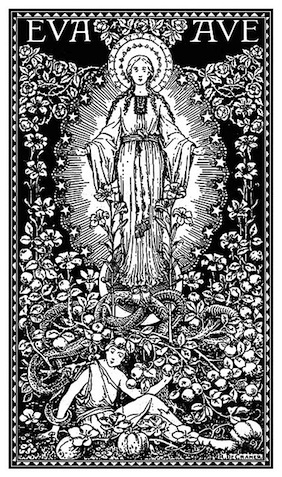
Eva… Ave: a pastoral letter on the Dormition BVM 2013

A.M.D.G.
In Dormitione Beatæ Mariæ Virginis
[Sexta die infra Octavam S. Laurentii]

Carissimi,

Today we celebrate the “Dormition of the Mother of God”, or the “Falling asleep of the Blessed Virgin Mary” older titles for the feast more commonly known now as “the Assumption”. Fortunately our recent reflections may help us to understand the significance of this feast and that other title of Mary, the “new Eve”.

Adam and Eve manuscript

The ultimate benefit of our salvation in Christ is the restoration of creation with God – the regaining of our corporeal immortality as God had originally intended “Let us make mankind in our image, in our likeness…” [Gen 1:26; Wisdom of Solomon 2:23] i.e. originally we were intended to enjoy the eternal nature of God with Him as created corporeal beings. Indeed, God created us intending us to be family to/with Him [cf Isaiah 43:7] to share His glory. Through Adam and Eve’s fall, humanity lost its corporeal immortality, “for dust you are and to dust you will return.” [Gen 3:19] How did this happen?

God told Adam and Eve; “You are free to eat from any tree in the garden; but you must not eat from the tree of the knowledge of good and evil, for when you eat from it you will certainly die.” [Gen 2:16-17] However, after they ate the forbidden fruit, they did not immediately fall dead! Many Christians interpret this seeming discrepancy i.e. that Adam and Eve did not immediately die, to mean that they died ‘spiritually’ that day, or that having been originally immortal, became mortal at that point. However, the text suggests that when they committed the original sin [Gen 3:6], God exacted an indirect penalty of death upon Adam and Eve. If the garden of Eden story is representative of history, humans were created to live forever in a physical body, but God removed their source of immortality on the day they sinned against Him…

In addition to the Tree of Knowledge of Good and Evil, God also placed a tree in the garden called the Tree of Life [Gen 2:9]. If Adam and Eve had eaten of this tree before they sinned, they would’ve realise the immortality God desired for humanity. Upon eating of the Tree of Good and Evil, God immediately removed Adam and Eve from the garden, and placed a flaming sword to guard the tree so they could not eat from it [Gen 1:22], “…therefore the LORD God sent him forth from the garden of Eden”, clearly indicating that Adam was removed from the garden before he would have the opportunity to eat of the Tree of Life and become immortal. This suggests that God didn’t want them to be sinful and immortal!

On the day Adam and Eve ate of the Tree of Knowledge they missed out on the opportunity of immortality because God removed their access to the Tree of Life which had been placed there for them, and without the essential elements the fruit was to provide we likewise all die, “For as in Adam all die,…” [1 Cor 15:22] So it was through disobedience that the knowledge of good and evil was wrought. Eve was deceived by the serpent who contradicted what God had said, the serpent said, “You will not certainly die,” [Gen 3:4] where God had said, “…you will certainly die.” [Gen 2:16-17] Clearly the deceptive serpent was lying; the serpent of course being the Devil – the first among the angels who turned away from God [topic for another post].

Now, some erroneously suggest that “the blame” or “guilt” was all Eve’s i.e. the woman’s; afterall, she it was who was gave in first to the Devil’s temptation and disobeyed God’s command and tempted Adam to the same. However, St Paul says, “For as in Adam all die…” because through their cooperation in disobedience, the fault was shared. Indeed, the curse spoken by God to the woman included subjugation to man, “I will make your pains in childbearing very severe; with painful labour you will give birth to children. Your desire will be for your husband, and he will rule over you.” [Gen 3:16] The egalitarianism of contemporary society of course would probably take exception to this notion! However, notice that actually there is parity, even complementarity for the expulsion from the Garden of Eden is shared by them both, man and woman and man is equally cursed, to toil and labour for food [cf Gen 3:17-19] and what is more, it is upon the man that the ultimate curse is placed for all of mankind “for dust you are and to dust you will return.” The curse of mortality is borne by Adam through it being born of Eve.

ConceptionBVM

Now “Eve” was the name given by Adam to woman, “Adam named his wife Eve, because she would become the mother of all the living.” [Gen 3:20] Before the Fall she was known simply as “woman” (ishah אשה); when they were expelled he called her, Eve which as is common with most names has a meaning, “life” (chavah חַוָּה, “live [giving]”) as indeed Adam means “the man” i.e. humanity (ha-adam אָדָם “the earthling”). As humanity, together they were condemned, “And the Lord God said, “The man has now become like one of us, knowing good and evil. He must not be allowed to reach out his hand and take also from the tree of life and eat, and live forever.” [Gen 3:22] Here the text makes plain that, had they not disobeyed God they might have eaten of the Tree of Life which fruit had not been forbidden them and God’s original desire might have been fulfilled.

So how is Our Lady the “new Eve”? Let’s not focus straight away on the element of sin, but of life. Just as Eve became the mother of humanity through the circumstances of the Fall, so Mary became the mother of salvation for humanity through the circumstances of the Incarnation. For as the mother of Christ the “new Adam” [1 Cor. 15.45], she became herself the “new Eve”. Before the Fall, Adam simply referred to Eve as “Woman”. However, after the Fall, Adam names his wife Eve, because she is the “mother of all living.” Notice that Our Lord never refers to Our Lady as “Mary” or even “Mother,” but always refers to her as “Woman” [John 2:1]. The most significant occasion on which He calls her “Woman” was during His crucifixion when He gives her to John (the Church) as “Mother” [John 19:26, 27].

Notice that Christ refers relationally to His Mother as “Woman,” which recalls Adam’s pre-Fall title for Eve, but when He refers to the Apostle’s relationship with Our Lady He uses the title “Mother.” Tradition tells us that John took Our Lady into his home in Ephesus and cared for her until her dormition (falling asleep). Christ called the disciples “brothers,” he told them that God was their “Father,” and he gave Mary to them as their “Mother.”

So as Eve was the mother of mortal life, so Mary as the “new Eve” is mother of immortal life… Just as through Adam came death, so in Christ the “new Adam” comes eternal life, reconciliation with God forever; the fruit of the Tree of the Cross is the fruit of the Tree of Life… (more to follow)…

Sancta Dei Genitrix, Mater omnium credentium, ora pro nobis!

I.X.


Deus avia: a pastoral letter on the Feast of St Anne 2013

A.M.D.G.
S. Annae Matris B.M.V.

Carissimi,

Jesus, Mary & Anna
Jesus, Mary & Anna

“…God’s granny” is the affectionate colloquial term used by devotee’s of today’s saint, St Anne and follows a certain, perhaps over familial but logical consequence resulting from the decree of the  Council of Ephesus in 431 of Mary as “Theotokos” i.e. the “Mother of God”. If Mary is “Mother of God” than the mother of Mary must be “God’s grandmother”!

According to the Protoevangelium of James (Christians whose tradition is only five hundred years old won’t be familiar with this work) generally attributed by scholarly consensus to the second century, the parents of Mary were Anna (anglicised to Anne) and Joachim. Though other members of Mary’s family are mentioned in the canonical Gospels, (e.g. her cousin, Elizabeth Lk 1:36, 39-40) the early date of the Protoevangelium of James and the fact that Mary was well known among the early Christian community in Jerusalem (Acts 1:14), has generally lent some authenticity to this tradition concerning Mary’s parentage and childhood and the work was very nearly included in the later codified New Testament canon (mid-4th Century).

Though the idea of “God’s granny” may perhaps be a little too “cutesy” for some, and the concept of God having a grandmother too difficult for others to comprehend without the  “Incarnationis Mysterium”, the tradition has helped many saints over the centuries develop a personal affinity to Our Lord through His earthly holy family. Afterall, we can relate to and more easily appreciate those things about which we are ourselves familiar, and the notion of family is certainly something the majority of us can relate to (sadly, even if our families themselves have been lacking in cohesiveness let alone holiness). Afterall, are we not by virtue of our baptisms, called “children of God” (John 1:11-13), “sharers in the Divine nature” (2 Peter 1:4), “co-heirs with Christ” (Romans 8:14-17)?

All this refers to our “divinisation” which was the purpose of a) our existence and b) our salvation through Christ. For we are (humanity was) created by God to “know Him, love Him and serve Him in this world, and be happy with Him forever in the next” as our Penny Catechism once taught us. Though “made in the image and likeness of God” we lost our corporeal immortality which God had first intended for us when He made the world, through the disobedience of Adam and Eve and so sin, which is a “deliberative will” (θέλημα γνωμικόν) in opposition to the “natural will” (θέλημα φυσικόν) created by God, necessitates our salvation and affects our reconciliation with God. As St. Justin Martyr tells us “[Men] were made like God, free from suffering and death, provided that they kept His commandments, and were deemed deserving of the name of His sons, and yet they, becoming like Adam and Eve, work out death for themselves; let the interpretation of the Psalm be held just as you wish, yet thereby it is demonstrated that all men are deemed worthy of becoming “gods,” and of having power to become sons of the Highest.” [“the Psalm”, 82:1-7]  But as the Penny Catechism says, “Our Saviour suffered to atone for our sins, and to purchase for us eternal life.” The manifestation of God’s love for us in Christ through His salvation on the Cross not only “restores” creation but “reconciles” us spiritually to God our Father, “See what love the Father has given us, that we should be called children of God; and so we are!” (1 John 3:1) and ultimately restores our corporeal immortality (i.e. “the resurrection of the body”) for the “life of the world to come” (the Creed) as the apostle Paul declares: “If the dead are not raised, then Christ has not been raised. If Christ has not been raised, your faith is futile and you are still in your sins. Then those also who have fallen asleep in Christ have perished” (1 Cor. 15:13–18).

As various of the Church Fathers attest, the Word became flesh to make us “partakers of the divine nature”: St. Irenaeus of Lyons “For this is why the Word became man, and the Son of God became the Son of man: so that man, by entering into communion with the Word and thus receiving divine sonship, might become a son of God.” St. Athanasius of Alexandria “For the Son of God became man so that we might become God.” St. Clement of Alexandria “The Word of God became man, that thou mayest learn from man how man may become God.” St. Cyril of Alexandria says that humankind “are called ‘temples of God’ and indeed ‘gods’, and so we are.” St. Gregory of Nazianzus implores humankind to “become gods for (God’s) sake, since (God) became man for our sake.” St. Basil of Caesarea stated that “becoming a god is the highest goal of all.” and St. Thomas Aquinas “The only-begotten Son of God, wanting to make us sharers in his divinity, assumed our nature, so that he, made man, might make men gods.”

So this title of affection for the “mother of the Mother of God”, reminds us that our Christian faith is “incarnational” i.e. focusing on Jesus Christ, the Word made Flesh, God made man, who humbled Himself to share in our humanity (Phil. 2:8). It reminds us that Jesus was human – as we are – and as a human He had a family – just as we do. The great claim of our Faith is that Jesus was not just a man but was also God and that we too may become like Him.  One of the great differences between the Christian Faith and other religions is that God in Christ interacted deliberately in our existence, in our timeline; that God is not “remote” and “aloof” and “disdainful” of His creation but rather so loves what He created that He desires us to be one with Him (cf John 3:16) and became one of us. Jesus was a real person, situated in a particular time and place and social environment, as various independent and objective historical sources aside from the sacred writings of the Christians of the Apostolic era attest. The remembrance then of “God’s granny” reminds us of this incarnational truth about Jesus and that we too are indeed God’s children through His baptism, and thus have “received the Spirit of adoption by whom we cry out Abba, Father.” (Romans 8:15)

As the “family” of God then, united as we are to Jesus through our baptism and to the saints who’ve gone before us in the “communion of saints”, let us “keep the feast” and honour another who, like us, was created to serve and love God and in so doing played her part in the history of the world’s salvation. For those of us with fond affection for our own grandmother’s, let us take inspiration in the knowledge of the love that Jesus must surely have had for His grandmother and in like fashion, and in obedience to His Divine Will, let us so honour our own grandparents as we do our parents and ultimately our Father in heaven. That we may each play our part in the salvation of the world, through loving discernment and respectful acquiescence of our own individual vocations to realise God’s desire for us to live in love and union with Him for eternity.

Sancta Anna, ora pro nobis.

‡Jerome OSJV