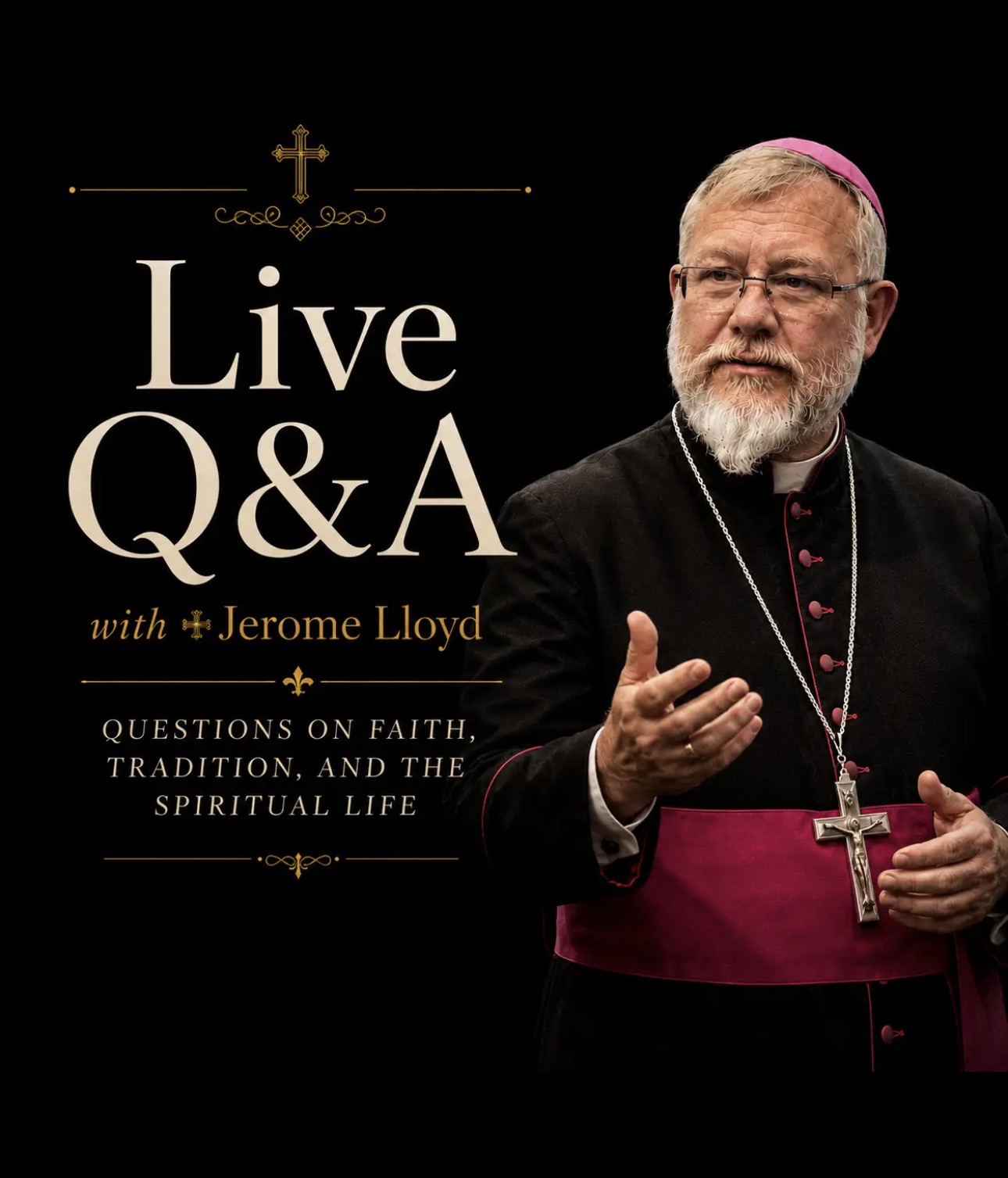
A Conference for the First Week of Lent

LENT: A TIME TO KNOW OURSELVES AND OUR NEED FOR REDEMPTION
By +Jerome, Primus of the Old Roman Apostolate

Introduction: The Inconvenient Truth of Lent

Modern man is a master of evasion. If there is one thing he cannot bear, it is silence. He must always have something—music, screens, chatter, distractions—to drown out the voice of conscience. He rushes about in a flurry of activity, as if by perpetual motion he could avoid that most dreadful of encounters: the confrontation with himself. He is like a man standing before a mirror but constantly adjusting the light so that he never quite sees the reflection staring back at him.

The modern world does not want you to know yourself. It would rather you lose yourself in an endless pursuit of trivialities. It tells you to indulge your every desire, to affirm yourself without question, to construct an identity based on fleeting emotions rather than immutable truth. The idea that man is a fallen creature, in desperate need of salvation, is simply intolerable to the progressive mind.

But this is nothing new. Fallen man has always sought to avoid the truth about himself. From the moment Adam hid in the garden, the human race has tried to escape self-knowledge. The world offers endless diversions, but at the end of the day, as every person facing death without faith discovers, the soul is still left alone with itself.

So how do we achieve this self-knowledge? How do we come to see what we truly are? Holy Mother Church, with a wisdom far surpassing the feeble intellects of our age, forces us—once a year—to stop, to strip away illusions, and to stand naked before the reality of what and who we are. That is what Lent is for. It is the season when we are called to abandon the artificial comforts that cushion our pride and to descend into the depths of our own souls. For unless we know ourselves, we cannot know our need for redemption. And unless we know our need for redemption, we cannot improve ourselves and we cannot weep on Good Friday nor rejoice on Easter Sunday.

The Church, in her collective wisdom gained through centuries of experience, provides the answer: through discipline, through suffering, through the stripping away of self-deception. Prayer, fasting, and almsgiving are not mere pious customs; they are weapons against the greatest enemy we will ever face—ourselves.

This is why Lent is so necessary. It is a time when we must take up the ancient weapons of the saints and do battle against the false self—the self that is proud, self-indulgent, and blind to its own misery.

True Self-Knowledge: Knowing Ourselves as Children of God

To know our true self is not merely to have an awareness of our strengths and weaknesses, nor is it simply to acknowledge our sins and failings. True self-knowledge is to know who and what we are as a child of God—to see ourselves as He sees us, as He created us, as He calls us to be.

The modern world teaches self-knowledge as a form of self-exploration, self-invention, or self-affirmation. We are told that identity is something we create, that truth is subjective, that we can be whatever we choose to be. But this is an illusion. The true self is not something we construct; it is something we receive. It is a gift, given by God.

A. Created by God, Called by God

From the very beginning, our identity has been given by God Himself. “Let us make man in our image, after our likeness” (Gen 1:26). This is the foundation of who we are—not autonomous individuals, not self-sufficient beings, but creatures formed by the very hands of God, stamped with His divine image, created for communion with Him.

But this is precisely what sin destroyed. Adam and Eve, in their pride, rejected their God-given identity. They desired to be as gods, determining for themselves what is good and evil, seeking self-sufficiency apart from their Creator. And ever since, mankind has been plagued by this same temptation—the temptation to define ourselves apart from God, to fashion our own image instead of conforming to His.

Yet even in our fallen state, God does not abandon us. He calls us back. He calls us to be who He created us to be, to reclaim our true identity as His children. And this is where true self-knowledge begins—not in introspection alone, but in relationship with Him.

B. Self-Knowledge in the Light of God

The world tells us to “look within” to find ourselves – to be “mindful” of our thoughts and feelings. But this is not enough. To truly know oneself, one must look outside of oneself and up—to God. We cannot know who we are until we know whose we are – that is – to know to whom we belong, where we came from and why we are here, in other words our purpose, our raison d’être, our “reason for being.”

This is why self-knowledge – apart from God – always leads to either pride or despair. If we rely solely on our own understanding, we will either deceive ourselves into thinking we are better than we are, or we will fall into despair when we see our weakness, or nihilism at the seeming futility of our existence. But when we see ourselves in the light of God, we see the truth—not only of our nothingness, but of our dignity, our calling, our redemption in Christ.

Consider the example of St. Peter. When Christ performed the miraculous catch of fish, Peter did not respond with excitement or pride. He fell to his knees and said, “Depart from me, for I am a sinful man, O Lord” (Lk 5:8). He saw himself clearly—not in the light of his own understanding, but in the presence of Christ. And yet, Christ did not reject him. He called him. He lifted him up. “Fear not; from henceforth thou shalt catch men” (Lk 5:10).

So it is with us. True self-knowledge does not leave us in despair, but in humility—a humility that allows us to receive God’s call and follow Him.

Knowing Ourselves in Relation to God

To know oneself is not simply to know one’s individual qualities, talents, or personality traits. It is to know oneself in relation to God. This means understanding three fundamental truths:

  1. We are creatures, utterly dependent on God.
  2. We are sinners, in need of His mercy.
  3. We are called to be saints, destined for eternal communion with Him.
A. We Are Creatures: Humility Before Our Creator

The first truth of self-knowledge is that we did not create ourselves. We are not the source of our own existence. Every breath we take, every moment of life is a gift from God. The modern world rejects this truth, promoting the illusion of self-sufficiency, but the Church reminds us: “What hast thou that thou didst not receive?” (1 Cor 4:7).

This is why pride is so deadly. It blinds us to our dependence on God. The man who thinks he is self-made, who believes he is in control, who imagines that he owes nothing to his Creator—such a man does not know himself at all. He is living in a lie.

This is why Lent is so necessary. It strips us of illusions, forcing us to acknowledge our frailty. Fasting reminds us that we are not sustained by bread alone. The ashes of Ash Wednesday remind us that we are dust. Every mortification, every discipline is a reminder of who we are before God—weak, dependent, yet infinitely loved.

B. We Are Sinners: The Reality of Our Need for Redemption

The second truth is even more difficult to accept. Not only are we creatures, but we are fallen creatures. We are sinners.

The world today hates the word “sin.” It prefers to speak of mistakes, struggles, misunderstandings. But sin is real. And sin is not merely an abstract concept—it is the corruption of the soul, the image of God in us, the turning away from God, the refusal to be who He created us to be in His likeness.

To know oneself is to know one’s sin. This is why the saints, who were the holiest of men and women, were also the most conscious of their unworthiness. They knew that without grace, they were nothing. St. Philip Neri used to pray, “Lord, beware of Philip today, lest he betray Thee.” St. Augustine cried out, “Lord, make me chaste—but not yet.” They knew themselves. And because they knew themselves, they knew their need for God’s mercy.

Lent is a time to enter into this same knowledge. It is a time to stand before God, as the Prodigal Son stood before his father, and say, “Father, I have sinned against heaven and before thee” (Lk 15:21). But just as the father in the parable ran to embrace his son, so too does God run to embrace us—if only we have the humility to return to Him.

C. We Are Called to Be Saints: The Destiny of the True Self

The final truth is the most glorious of all. We are not just creatures. We are not just sinners. We are called to be saints.

God did not create us for mediocrity. He created us for holiness. He created us to share in His divine life, to be transformed into His image, to dwell with Him forever ad share in His glory. The true self is not just the person we are now—it is the person God calls us to become.

This is why the Church gives us the disciplines of Lent. Not to punish us, not to burden us, but to free us. Free us from sin, from attachments, from all that keeps us from being who we were created to be. The world tells us that freedom is doing whatever we want. The Church tells us that freedom is becoming who we were made to be. And true freedom requires discipline, purification, and suffering.

This is the great paradox: To know ourselves, we must lose ourselves. To become who we are meant to be, we must die to who we think we are. As Our Lord said, “Whosoever shall lose his life for my sake, shall find it” (Mt 16:25).

The Three Pillars of Self-Knowledge: Prayer, Fasting, and Almsgiving

The Church, being a wise mother, does not merely tell us to “know ourselves” and leave us floundering. She gives us three practical means to achieve this: prayer, fasting, and almsgiving.

A. Prayer: Seeing Oneself in the Light of God

Prayer is not about “feeling good.” It is not about emotional experiences or warm sentiments. True prayer is the act of standing before God in all one’s wretchedness, in all one’s smallness, and acknowledging, “Lord, without Thee, I am nothing.”

The saints teach that prayer is a school of humility. The more one prays, the more one sees oneself clearly. This is why the proud do not pray—they cannot bear the sight of their own souls when illuminated by divine light. They would rather remain in darkness than admit their own poverty.

This is also why modern man has abandoned true prayer in favour of “spirituality” and vague sentimentalism. He does not want a God who judges, who commands, who calls him to repentance. He wants a God who affirms, who soothes, who makes no demands. But such a god is an illusion, a projection of the ego, and it has nothing to do with the living God of Scripture and Tradition.

Thus, in Lent, we must return to true prayer—prayer that strips us bare, that makes us see ourselves as we are, and that forces us to cry out, like the publican in the Gospel, “Lord, be merciful to me, a sinner.”

B. Fasting: The Discipline of the Flesh

The modern world has forgotten the value of fasting because it has forgotten the value of suffering. In an age obsessed with comfort, the very notion of voluntarily embracing discomfort is regarded as insanity.

And yet, the Church commands it. Why? Because fasting does something profound to the soul. It weakens the flesh, it subdues the passions, it makes us aware of our dependence on God. The man who fasts learns self-mastery; the man who refuses to fast remains a slave to his appetites.

There is a reason why the demons fear fasting. They know that a man who can say no to his stomach can also say no to sin. The saints tell us that fasting is a powerful means of conquering the passions. It exposes our attachments, reveals our weaknesses, and brings us face to face with the reality of our own limitations.

Thus, in Lent, fasting is not optional—it is essential. Without it, we will never learn self-control, and without self-control, we will never overcome ourselves.

C. Almsgiving: The Remedy for Selfishness

Finally, there is almsgiving—the forgotten virtue. In a world consumed by materialism, charity is seen as either a tax write-off or a sentimental act of self-congratulation. But true almsgiving is a death to self. It is an act of renunciation, a giving away of what we cling to, a breaking of the chains of selfishness.

Almsgiving is not just about money. It is about giving of oneself—one’s time, one’s patience, one’s kindness. It is about seeing Christ in one’s neighbour and acting accordingly. It is the final blow to the false self, the self that seeks only its own interests.

The Liturgy: The Great Teacher of Self-Knowledge

Lent is not merely a season of personal discipline; it is a journey through the Church’s liturgy. Each Mass, each reading, each chant is designed to lead us deeper into the mystery of our redemption.

On Ash Wednesday, the Church reminds us of our mortality: “Remember, man, that thou art dust, and unto dust thou shalt return.” These words are an antidote to pride, a stark reminder that all human glory is fleeting.

On the First Sunday of Lent, we see Christ in the desert, facing the temptations of the devil. He overcomes what Adam failed to overcome. This Gospel is a lesson in self-mastery, in obedience, in the necessity of resisting the deceits of the world.

As Lent progresses, the liturgy becomes more solemn. The statues are veiled, the chants become more sorrowful, the prayers more intense. The Church is preparing us for the great confrontation of Good Friday—the moment when we must stand before the Crucified Christ and ask ourselves: Do I truly know what He has done for me? Have I understood the price of my redemption?

Only the soul that has passed through the trials of Lent, that has confronted its own sinfulness, that has truly wept for its failings—only that soul will know the full joy of Easter morning.

The Cross and the Resurrection: The Ultimate Self-Revelation

The Christian life, my dear brethren, is not a philosophy or a moral system. It is not an ideology or a set of social teachings. It is, at its core, a participation in the Passion, Death, and Resurrection of Our Lord Jesus Christ. This means that Lent is not just about self-examination for its own sake—it is about preparing ourselves for the Cross, so that we might truly share in the Resurrection.

For modern man, suffering is something to be avoided at all costs. The world tells us to seek pleasure, comfort, and affirmation, and to reject anything that disturbs our sense of well-being. But the Church tells us something radically different. The Church tells us that suffering is necessary. Not because suffering is good in itself, but because through suffering, we are purified. Through suffering we come to recognize our helplessness and need for God. Through suffering, we come to know ourselves. Through suffering we come to know our strength. Through suffering, we are drawn out of our selfishness and into the mystery of Christ’s self-giving love. 

If we do not suffer with Christ, we cannot rise with Him. This is the lesson of the liturgy. The journey of Lent is a journey to Calvary, and there is no shortcut. Many souls want the joy of Easter without the agony of Good Friday, but that is not how Christianity works. To rise with Christ, we must first be crucified with Him.

The Hard Truth: We Are Either Saints or Slaves

Now, there is a very simple truth that many do not want to hear, but it must be said: You are either becoming a saint, or you are becoming a slave. There is no middle ground.

What do I mean by this? I mean that every choice we make is leading us in one of two directions: either toward God or away from Him. Every indulgence in sin, every act of self-deception, every compromise with the world makes us more enslaved to our body, the flesh, more enslaved to the devil, more enslaved to the illusions of our own self-sufficiency.

On the other hand, every act of discipline, every moment of self-denial, every sacrifice for the love of God makes us more free—free from the tyranny of our passions, free from the lies of the world, free from the chains of sin.

This is why the saints embraced suffering, not because they were masochists, but because they understood that the soul that refuses to suffer for Christ will inevitably suffer for the world. The man who refuses to fast for God – will become a slave to his stomach. The man who refuses to mortify his pride – will become a slave to the opinions of others. The man who refuses to give of himself in charity – will become a slave to his own greed and selfishness.

Lent is our opportunity to break free. It is our opportunity to make war against the false self, against the old Adam who clings to us like a corpse. And we make war not by our own strength, but by the grace of God, through the weapons of prayer, fasting, and almsgiving.

The Victory of the Resurrection: The Fruit of True Penance

Now, if we do this—if we truly embrace Lent as the Church intends—then when Easter morning comes, we will experience something that most of the world does not: true joy.

Not the fleeting, artificial happiness of the world, but the deep, unshakable joy that comes from having passed through death into life. This is what St. Paul means when he says, “If we suffer with Him, we shall also reign with Him” (2 Tim 2:12).

Easter is not just a day on the calendar. It is a reality in the soul. And only the soul that has suffered with Christ, that has confronted itself in Lent, that has wept at the foot of the Cross, will be able to stand before the empty tomb with a heart that is truly alive.

For those who have not lived Lent well, Easter will come and go as just another day. But for those who have fought the good fight, Easter will be an explosion of grace, a foretaste of the glory that awaits those who persevere to the end.

Conclusion: The Call to Choose—Now

So, my dear brethren, the choice is before us. Lent has begun. Will we use it? Will we take up our cross daily and follow Christ? Or will we pass through these forty days unchanged, as if they were nothing?

Make no mistake: how we live this Lent will determine how we experience Easter. If we do not mortify ourselves, if we do not fast, if we do not pray, if we do not give alms, if we do not make war on sin—then Good Friday will come, and we will not weep. Easter will come, and we will not rejoice.

But if we embrace this season with humility and courage—if we allow ourselves to be stripped, purified, and emptied—then, when the bells of Easter ring out and the Gloria resounds once more, we will know in our hearts that we have truly passed from death to life.

Let us then ask Our Blessed Mother, who stood at the foot of the Cross with perfect faith, to intercede for us. Let us ask her to help us know ourselves as we truly are, that we may know our need for her Son, and that we may one day share in His Resurrection.

In Nomine Patris, et Filii, et Spiritus Sancti. Amen.


Lent Conferences 2025


Epiphany: Blessing of Water

The Blessing of Epiphany Water

The blessing of water on Epiphany (January 6) is a profound and ancient tradition in both the Eastern and Western Churches. It symbolizes Christ’s baptism in the Jordan River, the sanctification of creation, and the manifestation of the Holy Trinity. This sacred act elevates water as a vehicle for divine grace, highlighting its role in purification, blessing, and spiritual protection.

Origins and Significance

The origins of the blessing of Epiphany water trace back to the early Church, where Epiphany, also known as Theophany in the Eastern tradition, commemorates the revelation of Christ’s divinity during His baptism. The event at the Jordan River marked the sanctification of the waters and, by extension, all creation. The Church adopted the blessing of water to reflect this event, emphasizing its purifying and life-giving properties¹.

In the early Christian community, Epiphany water was used not only for baptisms but also as a sacramental for healing, protection from evil, and as a blessing for homes and fields. This practice highlights the Church’s understanding of water as a medium through which God’s grace flows to His people².

Liturgical Practice

The blessing of Epiphany water is a solemn rite that differs slightly between the Western and Eastern Churches but maintains a shared theological foundation.

In the Western Church:
The ritual involves the exorcism of the water and salt, prayers invoking the Holy Trinity, and the mingling of salt into the water. The blessing traditionally takes place after compline or after mattins of the Epiphany.

These actions signify the purification of the water and its consecration as a means of spiritual and physical protection. A typical prayer includes:

“O God, who for the salvation of mankind has built Your greatest sacraments on this substance of water, graciously hear our prayers and pour forth Your blessing on this element, which we consecrate with manifold purifications. May this water, when sprinkled, protect us from harm, purify us from sin, and be a sign of Your divine grace.”

The water is then used to bless the congregation, objects, and homes, reinforcing its sacramental role³.

In the Eastern Orthodox Church:
The Great Blessing of Waters is central to the Theophany liturgy. A priest immerses a cross into the water three times, often accompanied by hymns and prayers celebrating Christ’s baptism. This act symbolizes the descent of the Holy Spirit upon the waters, recalling the presence of the Trinity at the Jordan River. The faithful often drink the blessed water or take it home for personal use, emphasizing its role as a source of spiritual strength and renewal⁴.

Cultural Traditions

The blessing of Epiphany water is often accompanied by rich cultural expressions that deepen its significance:

  1. House Blessings
    Epiphany water is traditionally used for blessing homes. Priests or family members sprinkle the water throughout the house, praying for protection from evil, health, and prosperity. This custom often coincides with the chalking of the door, where the year and initials “C+M+B” (Caspar, Melchior, Balthasar, or Christus Mansionem Benedicat—”May Christ bless this house”) are written⁵.
  2. Healing and Protection
    Epiphany water is believed to possess healing properties, both spiritual and physical. It is often used during times of illness, in moments of spiritual distress, or as a sacramental to ward off evil influences. The faithful may also sprinkle it on their fields and livestock, asking for God’s blessing and protection⁶.
  3. Outdoor Processions and Blessings
    In Orthodox and Eastern Catholic communities, outdoor processions to rivers, lakes, or other bodies of water are common. A cross is ceremonially immersed in the water to bless it, reenacting Christ’s baptism. In some regions, participants dive into icy waters to retrieve the cross, an act symbolizing faith, renewal, and courage⁷.
  4. Communal Celebrations
    The blessing of Epiphany water is often a community event, with the faithful gathering to receive the water, share in its benefits, and reaffirm their baptismal promises. These gatherings foster a sense of unity and shared faith within the Church⁸.

Symbolism and Spiritual Reflection

Epiphany water embodies the sanctification of creation and serves as a tangible reminder of the grace flowing from God through the sacraments. It connects the faithful to Christ’s baptism, urging them to reflect on their own baptismal vows and their call to live as children of God.

Water, as a symbol of life and purity, resonates deeply with the themes of Epiphany. It represents the cleansing power of Christ’s Incarnation and the transformative grace that flows from His revelation to the world. The practice also reinforces the Church’s sacramental worldview, where physical elements like water are infused with spiritual significance⁹.

Conclusion

The blessing of Epiphany water is a timeless tradition that bridges the liturgical and the personal, the sacred and the everyday. Whether used for liturgical celebrations, household blessings, or personal devotion, Epiphany water serves as a powerful sacramental, embodying themes of purification, renewal, and divine protection. This practice continues to enrich the celebration of Epiphany with its profound spiritual and cultural significance, reminding the faithful of God’s presence in all aspects of creation.


¹ Matthew 3:13–17; Catechism of the Catholic Church, §1214.
² Dujarier, M., A History of Water Blessings in the Early Church (1968), pp. 45–50.
³ Roman Ritual, Blessing of Water on Epiphany.
⁴ Eastern Orthodox liturgical texts, The Great Blessing of the Waters (Theophany).
⁵ Butler, A., Lives of the Saints (January 6).
⁶ Miles, C., Christmas Customs and Traditions (2017), pp. 130–133.
⁷ Orthodox Christian Studies, Festal Practices in the Eastern Church (Athens, 2002), pp. 211–213.
⁸ Frazer, J. G., The Golden Bough: A Study in Magic and Religion (1922), pp. 512–514.
⁹ Roman Ritual, Blessings and Sacramentals.

Epiphany: Cider Blessing

The Blessing of Mead or Cider on Epiphany (January 6)

The blessing of mead or cider on Epiphany, January 6, is a tradition observed in various regions, particularly in Northern and Western Europe. This custom blends Christian liturgical practices with agricultural and cultural traditions, symbolizing thanksgiving for the harvest and invoking blessings for the coming year.

Origins and Significance

Epiphany celebrates the revelation of Christ to the Gentiles, represented by the Magi, and often includes themes of abundance and thanksgiving. Mead and cider, both products of harvested fruits and honey, hold symbolic significance as gifts of the earth. The blessing of these beverages reflects gratitude for the previous year’s bounty and petitions for prosperity in the new year¹.

This tradition is especially prominent in regions where cider production is culturally significant, such as England, Ireland, and parts of Scandinavia. In these areas, cider and mead were historically associated with festive gatherings and community celebrations, making them natural choices for Epiphany blessings².

Liturgical Practice

The blessing of mead or cider may be included as part of an Epiphany liturgy or celebrated separately in a communal setting. A common prayer invokes divine favour upon the beverage and those who consume it:

“Bless, O Lord, this creature of mead (or cider), the work of human hands and the fruit of your creation. May it bring joy and health to all who partake of it, and may your blessings flow upon the laborers of the fields and orchards. Through Christ our Lord.”

This blessing underscores the sanctity of creation and the role of human cooperation with God’s providence³.

Cultural Traditions

  1. Wassailing
    In England, the blessing of cider is closely tied to the wassailing tradition, particularly in cider-producing regions like Somerset and Herefordshire. Wassailing involves a communal celebration where cider is blessed and poured at the roots of apple trees to ensure a good harvest. Participants sing traditional songs, and the act of pouring cider on the trees symbolizes an offering of gratitude and a prayer for fertility⁴.
  2. Mead in Scandinavian Customs
    Mead, a fermented honey beverage, has deep roots in Scandinavian and Northern European culture. On Epiphany, mead blessings are linked to the idea of sweetness and abundance, invoking the Magi’s gifts and the sweetness of Christ’s revelation⁵.
  3. Irish and Celtic Influence
    In Celtic traditions, mead and cider are often blessed during communal feasts on Epiphany, reflecting a fusion of Christian liturgical practices with older harvest and fertility rites. These blessings emphasize protection, health, and the unity of the community⁶.

Symbolism and Spiritual Reflection

The blessing of mead or cider on Epiphany reflects the Christian understanding of creation as a gift from God, to be cherished and offered back in thanksgiving. Cider and mead, as products of the earth and human labour, symbolize the harmony between divine providence and human stewardship. The practice also serves as a reminder of the joy and abundance associated with the Incarnation and Christ’s manifestation to the world.

Conclusion

The blessing of mead or cider on Epiphany is a meaningful tradition that combines gratitude, cultural heritage, and Christian spirituality. Rooted in themes of abundance, thanksgiving, and blessing, it connects the faithful to the rhythms of creation and the joy of Christ’s revelation. Whether in liturgical settings or festive communal gatherings, this custom continues to enrich the celebration of Epiphany with its unique blend of sacred and cultural significance.


¹ Acts 14:17: “He has not left himself without testimony: He has shown kindness by giving you rain from heaven and crops in their seasons.”
² Miles, C., Christmas Customs and Traditions: Their History and Significance (2017), pp. 123–125.
³ Roman Ritual, Blessings for Food and Drink (Epiphany).
⁴ Frazer, J. G., The Golden Bough: A Study in Magic and Religion (1922), pp. 512–514.
⁵ Scandinavian liturgical practices, Festal Blessings and the Church Year (Lund, 2005), pp. 98–100.
⁶ Ó hÓgáin, D., The Sacred Isle: Belief and Religion in Pre-Christian Ireland (1999), pp. 187–189.

Childermas: Parental Blessings

An old English name for the Feast of the Holy Innocents is Childermas, a term derived from the Old English words for “child” and “mass.” This feast commemorates the male infants tragically killed by King Herod in his attempt to eliminate the Christ Child. These young martyrs are honoured as the first witnesses to Christ, their sacrifice foreshadowing the passion and ultimate victory of Jesus.

Childermas has been observed since the early centuries of Christianity, with records of its celebration found in ancient liturgical texts like the Leonine Sacramentary from the 5th century. The day serves as a poignant reminder of the cost of Christ’s coming into the world and the innocence of children who hold a special place in God’s kingdom.

Background

The Catholic tradition of parents blessing their children on the Feast of the Holy Innocents has deep roots, emphasizing the sacred role of parents as the primary spiritual guardians of their families. In the domestic church, which is the family home, parents take on a priestly role in interceding for and guiding their children in faith. On this feast, they are encouraged to formally bless their children, either through a simple or formal ritual.

For the simple blessing, parents may trace the sign of the cross on their child’s forehead using their right thumb dipped in holy water. As they do so, they say:

“May Almighty God bless you, and may He be the Guardian of your heart and mind—the Father, + Son, and Holy Spirit. Amen.”

This act is a humble yet profound gesture, invoking God’s protection over the child’s heart, mind, and soul while reaffirming the parents’ commitment to raising their child in the faith.

The formal blessing, as found in the Roman Ritual, is a longer prayer that draws upon the imagery of Christ’s embrace of children during His earthly ministry. The blessing reads:
“O Lord, Jesus Christ, Who didst embrace and lay thy hands upon the little children when they came to thee, and didst say to them: ‘Suffer little children to come unto me, and forbid them not, for the kingdom of heaven is theirs, and their angels always see the face of my Father,’ — look with a Father’s eye upon the innocence of these children (and their parents’ devotion), and bless them this day (through our ministry). By thy grace and goodness let them make progress in desiring thee, loving thee, fearing thee, obeying thy commandments — thus coming to their destined home, through thee, Saviour of the world, Who with the Father and the Holy Spirit livest and reignest, God, forever and ever. Amen.”

This prayer highlights the tender relationship between Christ and children, calling upon God’s grace to help the child grow in virtue and faith. It also acknowledges the parents’ devotion, linking their role to Christ’s own ministry of welcoming and blessing children.

Rite of Blessing

Father: O Lord, hear my prayer.
All: And let my cry come unto Thee.
Father: Let us pray.
O Lord Jesus Christ, once Thou embraced and placed Thy hands upon the little children who came to Thee, and said: “Suffer the little children to come unto Me, and forbid them not, for theirs is the kingdom of heaven, and their angels always see the face of my Father!” Look now with fatherly eyes on the innocence of these children and their parents’ devotion, and bless them this day through our prayers.

The father signs the forehead of each child with holy water.

Father: In Thy grace and goodness let them advance continually, longing for Thee, loving Thee, fearing Thee, keeping Thy commandments. Then they will surely come to their destined home, through Thee, Saviour of the world. Who lives and reigns forever and ever.
All: Amen.

Father: May God bless you. And may He keep your hearts and minds — the Father, Son and the Holy Spirit.
All: Amen.

Customs

Historically, the Feast of the Holy Innocents has been marked by various customs. In medieval Europe, the day was associated with the “Boy Bishop” tradition, where a young boy was chosen to act as a bishop for the day, leading processions and sometimes performing symbolic duties in the church. In certain regions, Childermas was considered an inauspicious day for beginning new projects, as it was associated with tragedy and loss.

In Spain and Hispanic countries like Mexico, and the Philippines, the feast is known as “Niños Inocentes” and Childermas is rather like April Fools Day is in the UK, America and France. Tricks are pulled, and the one tricked is called “Innocente!” rather than an “April Fool!” In many places, it is the young who play tricks on their elders, whom they often lock inside rooms and such until the oldsters pay a ransom!

Conclusion

Today, the Feast of the Holy Innocents continues to serve as a reminder of the sanctity of life and the importance of protecting the innocent. The custom of blessing children on this day provides a meaningful opportunity for families to gather in prayer, reflect on the significance of Christ’s incarnation, and renew their commitment to raising children in faith and love. Through these blessings, parents not only invoke God’s protection over their children but also affirm their own role as spiritual leaders within the family. This sacred tradition strengthens the bond between parents and children while fostering a deeper connection to the Church’s rich liturgical heritage.

St John’s Day Blessing of Wine

The Blessing of Wine on St. John the Evangelist’s Feast

The blessing of wine on the feast of St. John the Evangelist (December 27) is a cherished tradition within the Church, blending Scripture, legend, and liturgical practice. This blessing carries profound spiritual and symbolic meaning, connecting the faithful to St. John’s life, witness, and the miraculous protection attributed to his intercession.

Origins of the Tradition

St. John the Evangelist, traditionally known as the author of the Gospel of John, the Epistles of John, and the Book of Revelation, is uniquely associated with themes of divine love, light, and truth. He is celebrated as the “Beloved Disciple,” who leaned on Christ’s breast at the Last Supper (John 13:23), making him an emblem of intimate communion with Jesus¹.

The association of wine with St. John arises from an early Christian legend. According to the story, St. John was challenged by a pagan priest to drink a cup of poisoned wine. Before consuming it, he made the Sign of the Cross and prayed over the chalice. The poison was rendered harmless, and St. John drank the wine without harm, thereby converting those who witnessed the miracle². This account became a symbol of St. John’s unwavering faith and the divine power protecting him.

Liturgical Practice of the Blessing

The Church incorporated this miraculous event into its liturgical life through the custom of blessing wine on St. John’s feast day. The ritual is included in the Roman Ritual, a book of prayers and blessings, and it is performed by a priest using a specific prayer and gestures³.

The text of the blessing highlights the protective and sanctifying power of God:

“Bless, O Lord, this creature of wine, that it may be a saving remedy to all who drink it; and grant that through the intercession of St. John, Apostle and Evangelist, all who partake of it may be preserved from every disease of mind and body and receive your blessing of health and peace.”

The prayer explicitly calls upon St. John’s intercession to ensure the wine brings spiritual and physical health to those who drink it. It also invokes divine protection against any harm, echoing the miraculous poisoning story.

This blessing can take place in various settings: during the Mass, after the Divine Office, or as part of a special ceremony where the faithful bring bottles of wine to be blessed.

Symbolism of Wine in Christian Tradition

The act of blessing wine on this feast day carries deep theological and spiritual significance.

Biblical Symbolism of Wine
In Scripture, wine is often associated with joy, abundance, and the covenant between God and His people. At the Wedding at Cana, Jesus performed His first miracle by turning water into wine (John 2:1–11). In the Eucharist, wine becomes the Blood of Christ, symbolizing His sacrificial love and union with the Church⁴. By blessing wine on St. John’s feast, the faithful are reminded of these biblical themes and the sanctity of creation.

Connection to St. John’s Witness
St. John’s writings are filled with imagery of life, love, and light—qualities also evoked by wine in Christian tradition. The blessed wine becomes a tangible sign of his intercession and a reminder of the protection and blessings that flow from God.

Spiritual Health and Protection
The blessing emphasizes the sacramental worldview of the Church, where material elements like wine are used as vehicles of divine grace. Just as St. John was unharmed by poison, the blessed wine is believed to convey health and spiritual well-being to those who consume it.

Customs and Cultural Practices

The blessing of wine on St. John’s feast day is celebrated in diverse ways across the Catholic world.

Blessed Wine in the Home
Families often bring bottles of wine to be blessed at church. These bottles are then shared at meals or kept for special occasions, such as toasting to health and happiness throughout the year. In some traditions, a small amount of the wine is reserved and used as a remedy during times of illness⁵.

The “St. John’s Toast”
It is customary to offer a toast in honour of St. John when drinking the blessed wine. The toast often includes a short prayer, such as:
“I drink you the love of St. John.”
This practice reinforces the communal and celebratory nature of the blessing, drawing families and friends together in gratitude and joy.

Regional Variations
In some regions, the blessing is accompanied by festive gatherings or parish celebrations, where the blessed wine is shared among the congregation. These events are an opportunity to strengthen bonds within the community and reflect on the virtues of St. John.

Spiritual Reflection

The blessing of wine on St. John’s feast invites the faithful to reflect on the saint’s life and witness. His writings emphasize themes of divine love and truth, encapsulated in verses such as “God is love” (1 John 4:8) and “The light shines in the darkness, and the darkness has not overcome it” (John 1:5). By blessing and sharing wine, Christians participate in a tradition that unites the material and spiritual realms, transforming a simple act into an expression of faith and thanksgiving.

Conclusion

The blessing of wine on the feast of St. John the Evangelist is a beautiful blend of history, liturgy, and devotion. It draws attention to St. John’s miraculous intercession, the sanctity of creation, and the joy of Christian fellowship. Whether shared among family, blessed for health, or simply enjoyed with gratitude, the blessed wine serves as a reminder of God’s providence and the enduring power of faith. This tradition remains a testament to the Church’s ability to elevate ordinary elements of daily life into profound expressions of divine grace.


¹ John 13:23.
² Butler, A., Lives of the Saints (December 27).
³ Roman Ritual, Blessings for Special Occasions.
⁴ John 2:1–11; Catechism of the Catholic Church, §1329.
⁵ Local customs documented in regional Church histories.


Rite for the Blessing of Wine on the Feast of St. John, Apostle and Evangelist

At the end of the principal Mass on the feast of St. John, Apostle and Evangelist, after the last Gospel, the priest, retaining all vestments except the maniple, blesses wine brought by the people. This is done in memory and in honour of St. John, who drank without any ill effects the poisoned wine offered to him by his enemies.

Priest: Our help is in the name of the Lord.
All: Who made heaven and earth.

P: The Lord be with you.
All: And with your spirit.

Let us pray. If it please Thee, O Lord God, bless + and consecrate + this vessel of wine by the power of Thy right hand; and grant that, through the merits of St. John, apostle and evangelist, all Thy faithful who drink of it may find it a help and a protection. As the blessed John drank the poisoned potion without any ill effects, so may all who today drink the blessed wine in his honor be delivered from poisoning and similar harmful things. And as they offer themselves body and soul to Thee, may they obtain pardon of all their sins; through Christ our Lord.
All: Amen.

O Lord, bless + this creature drink, so that it may be a health-giving medicine to all who use it; and grant by Thy grace that all who taste of it may enjoy bodily and spiritual health in calling on Thy holy name, through Christ our Lord.
All: Amen.

May the blessing of almighty God, Father, Son, + and Holy Ghost, come down upon this wine and remain always.
All: Amen.

It is sprinkled with holy water. If the blessing is given privately outside of Mass, the priest is vested in surplice and stole and performs the ceremony as given above.


St. John’s Love (serves 8)

When the blessed wine is drunk on his Feast Day, we drink it before dinner as a toast to St. John. The Father of the house lifts his glass toward Mother and says, “I drink you the love of St. John.” The Mother replies “I thank you for the Love of St. John” and then turns to the oldest child, lifts her glass, and says, “I drink you the love of St. John…” — and on it goes down the line until each has been toasted.

The wine may be drunk as is before and with dinner, as above, or may be mulled and used as in this recipe:

1 quart red wine
3 whole cloves
1/16 teaspoon ground cardamom
2 two-inch cinnamon sticks
1/2 teaspoon ground nutmeg
1/2 cup sugar

Pour the wine into a large saucepan. Add the remaining ingredients. Heat well for 5 minutes (this can evaporate the alcohol, sadly). Serve hot, clinking glasses with the toast “Drink the love of St. John!” Doing this in front of a roaring fire makes it all the better.

The Twelve Days of Christmas Catechism

Join Archbishop Jerome this Christmas season for a spiritual journey through the Twelve Days of Christmas, uncovering the hidden catechetical meaning behind this beloved carol. Each day’s reflection explores the virtues, teachings, and mysteries symbolized by the song’s “gifts,” drawing us closer to Christ and the abundant blessings of our faith. Rooted in Scripture and tradition, these meditations invite us to deepen our devotion, reflect on God’s call to holiness, and carry the light of Christmas into our daily lives.

The Twelve Days of Christmas: A Catechetical Journey

The Twelve Days of Christmas is often regarded as a joyful and whimsical carol, but beneath its festive melody lies a profound catechetical purpose. Traditionally celebrated from Christmas Day to the Feast of the Epiphany, these twelve days mark a time of spiritual reflection and renewal, inviting the faithful to delve deeper into the mysteries of Christ’s Incarnation and the truths of the Christian faith.

Historical tradition suggests that during the penal times in England, when Catholic practice was outlawed, the Twelve Days of Christmas served as a covert catechism. Its seemingly playful verses concealed a deeper meaning, allowing the faithful to teach and remember essential elements of their faith. Each “gift” in the carol represents a specific truth: the virtues, sacraments, commandments, and foundational doctrines of the Church. These symbolic gifts provided a way for the faithful to maintain their religious identity in a time of persecution.

This series of meditations by Archbishop Jerome, builds on the carol’s catechetical foundation, offering reflections rooted in Scripture and sacred tradition. Each day highlights the spiritual significance of the “gift,” guiding the faithful to consider its meaning in the light of Christ’s saving work. Through these meditations, we are reminded of the riches of God’s grace, the beauty of His Church, and the call to live as faithful disciples. May this journey through the Twelve Days of Christmas inspire a deeper understanding of the faith and renew our joy in the Good News of Jesus Christ.

St Stephen’s Day Blessing of Bread

The Blessing of Bread on St. Stephen’s Feast (December 26)

The blessing of bread on St. Stephen’s Day, observed on December 26, is a tradition that reflects the saint’s legacy of charity and service. St. Stephen, recognized as the first Christian martyr, was one of the original deacons appointed to distribute alms and care for the needy in the early Church. This practice of blessing bread embodies his commitment to aiding the poor and fostering community unity.

Origins and Significance

St. Stephen’s role as a deacon involved ensuring equitable distribution of resources among the early Christians, particularly widows and the impoverished¹. Bread, a fundamental symbol of sustenance, became associated with his acts of service. Blessing and sharing bread on his feast day serves as a reminder of the Christian duty to care for others, especially those in need².

Liturgical Practices

In various Christian traditions, the blessing of bread on St. Stephen’s Day is integrated into the liturgy. Priests may bless loaves of bread during or after the Mass, invoking God’s grace upon those who partake in it. The faithful often bring bread to be blessed, which they then share with family, neighbors, and the less fortunate, symbolizing communal bonds and the extension of charity³.

Cultural Traditions

Across different cultures, unique customs have developed around the blessing of bread on St. Stephen’s Day:

  • Poland and Slavic Countries: In Poland and other Slavic nations, bread is sometimes baked in the shape of horseshoes on St. Stephen’s Day. This practice is linked to St. Stephen’s patronage of horses, and the blessed bread is believed to bring protection and good fortune to livestock and their owners⁴.
  • Austria: Known as Stefanitag, St. Stephen’s Day in Austria includes traditions where horses are brought to towns or churches to be blessed by priests. These animals are often fed holy bread and salt during the blessing ceremonies, reflecting St. Stephen’s association with the welfare of horses⁵.
  • Ireland: In Ireland, St. Stephen’s Day, or Lá an Dreoilín (Wren Day), involves unique customs where groups, historically known as “wren boys,” would dress in costumes and go from house to house, singing and collecting offerings. While not directly related to the blessing of bread, these traditions emphasize community involvement and charity, resonating with the spirit of St. Stephen’s legacy⁶.
  • United Kingdom. Boxing Day, celebrated on December 26, derives its name from the historical custom of giving “Christmas boxes” to servants, tradespeople, and the poor, aligning with the charitable spirit of St. Stephen’s Day. Wealthy families would provide gifts or bonuses to their staff, who often worked on Christmas, while churches distributed donations collected in alms boxes to the needy. This tradition, reflecting St. Stephen’s example of service and generosity, evolved into a public holiday now associated with shopping sales, sports events, and acts of charity, maintaining its roots in gratitude and giving.

St. Stephen is the patron of stone masons, those with headaches, and, curiously, horses. The reason for this last is unknown, but this patronage is very ancient, and in rural cultures and olden times, horses are/were blessed, adorned, and taken out sleighing, and foods for horses were blessed to be fed to them in times of sickness. St. Stephen is most often represented in art at in deacon’s vestments at his martyrdom, with a pile of rocks, with a wounded head, etc.

Symbolism and Spiritual Reflection

The blessed bread serves as a tangible representation of Christ, the “Bread of Life,” and reflects the Eucharistic significance of unity and sharing in the Christian faith⁷. Consuming or distributing this bread on St. Stephen’s Day encourages the faithful to emulate his virtues of generosity, service, and unwavering faith, reinforcing the call to support and uplift one another within the community⁸.

A note about this day and the next and the next: each of the first three days following the Feast of the Nativity commemorates a different type of martyrdom, and by remembering each type of martyrdom that was endured, you can remember the order of these Feasts:

The Feast of Stephen on the 26th recalls the highest class of martyrdom — that offered by both deed and the will — or “martyr by will, love, and blood.”

The Feast of St. John the Evangelist on the 27th recalls the second highest class of martyrdom, a sort of dry martyrdom — the martyrdom offered by those we call “confessors,” i.e., people who suffered for the Faith, would die for the Faith, but, in fact, didn’t have to. St. John was a martyr by “will and love.”

The Feast of the Holy Innocents on the 28th recalls the sort of martyrdom in deed, but not of the will as they were too young to form such a desire. They were martyrs by blood alone, but it is said that “that God supplied the defects of their will by His own acceptance of the sacrifice.”
Note, though, that the term “martyr” is otherwise almost always used exclusively for those who’ve actually died for the Faith, not for confessors .

On an historical note, the Feast of Stephen was once offered in honour of all deacons, and the Feast of St. John was offered for all priests, while the Feast of the Holy Innocents was offered for all choirboys and students.

Conclusion

The tradition of blessing bread on St. Stephen’s Feast is a meaningful observance that intertwines liturgical practice with cultural expressions of faith. It honours St. Stephen’s dedication to charity and service, inspiring believers to continue his mission of compassion and care for others, particularly during the Christmas season when themes of giving and community are paramount.


¹ Acts 6:1–6.
² Butler, A., Lives of the Saints (December 26).
³ Roman Ritual, Blessing of Bread.
⁴ Traditional Polish customs for St. Stephen’s Day.
⁵ Austrian cultural traditions, Blessings and Feasts.
⁶ Pilgrimage Medieval Ireland, Lá an Dreoilín: Wren Day.
⁷ John 6:35; Catechism of the Catholic Church, §1329.
⁸ Regional practices documented in Christmas and Feast Day Customs.


St. Stephen’s Day Pie

The most common recipes that have “St. Stephen” in their titles are ones that use up leftovers from the Christmas feast. One such recipe is for St. Stephen’s Day Pie, which uses up leftover meat, vegetables, and mashed potatoes:

1 TBSP butter
1/2 onion, minced
2 cloves garlic, minced
2 cups leftover turkey or ham (or a combination of the both), chopped
1 cup mixed vegetable or peas or corn or combination therefor (frozen is fine)
1 cup turkey gravy, approximately*
salt & pepper to taste
2 tsp marjoram
4 cups mashed potatoes

Heat oven to 350F. In a medium-sized cast-iron skillet, melt butter, add onions and garlic, and cook until soft. Add meat and mixed vegetables. Add enough gravy for all the ingredients to come together, the marjoram, and salt and pepper. Turn off the heat, and evenly spread the mixture in the skillet (or transfer to a 9X13 pan). Warm up the mashed potatoes, and mix in enough milk to soften them and make them spreadable. When soft, spread over the filling in the skillet (or the 9X13 pan). Smooth the top of the meat mixture, making a pretty pattern in the top as you do. Bake at 350F for 25 minutes, or until the top turns golden.

  • You can use one cup of chicken, turkey, or vegetable stock thickened by a roux (a TBSP of flour and a TBSP of butter cooked together for 1 minute)

Adventus Regis: A meditation for Christmas Eve and the Christmas Season

As Mass is offered later in the day on Christmas Eve, this meditation is offered to prepare our hearts and minds for the profound mystery of the Incarnation. It is an opportunity to reflect deeply on the gift of the Word made flesh, the humility of His birth in a stable, and the unfathomable love of God that brought salvation to the world. Let us enter into this sacred time with reverence and gratitude, setting aside worldly concerns to focus on the light of Christ, who dispels all darkness and fills our lives with hope and peace.

O Emmanuel

The seventh great “O” is: O Emmanuel, Rex et legifer noster, exspectatio gentium, et Salvator earum: veni ad salvandum nos Domine Deus noster.

English: O Emmanuel, God with us, our King and lawgiver, the expected of the nations and their Savior: come to save us, O Lord our God.

It reflects the following prophecies and Scripture:

O Emmanuel, God with us, our King and lawgiver, the expected of the nations and their Saviour:

  • immanuel03Therefore the Lord himself shall give you a sign; Behold, a virgin shall conceive, and bear a son, and shall call his name Immanuel. Isaiah 7:14 [also Isaiah 8:8; Isaiah 8:10] The Hebrew word ‘virgin’ occurs seven times in the Old Testament. It means a young woman of marriageable age, normally a virgin (Gen. 24:43). The Septuagint (the Greek translation of the Old Testament made about 150 b.c.) translated with a word more specifically meaning “virgin.” The New Testament understands Isaiah to be designating the Virgin Mary (Matt. 1:23). See “The Virgin Birth of Jesus” at Luke 1:27. Immanuel means “God with us.” The name conveys God’s promise to save, bless, and protect His children. Tradition identifies the child as the Messiah, a divine personage whose birth is above nature. It equates the Child named “Immanuel” with the Child possessing God’s titles in 9:6, and with the “Branch” of ch. 11.
  • Isaiah7.14Behold, a virgin shall be with child, and shall bring forth a son, and they shall call his name Emmanuel, which being interpreted is, God with us. Matthew 1:23 Jesus’ conception by a virgin is miraculous, announcing that God will soon redeem His people and is present with them. This quotation is the first of a number of Old Testament references Matthew uses to show that Jesus fulfills the Old Testament. A parallel thought is found in  John 1:14 And the Word was made flesh, and dwelt among us, (and we beheld his glory, the glory as of the only begotten of the Father,) full of grace and truth. Highlighting the fulfilment of the Messianic prophecies in Christ (see O Adonai)
  • And I will shake all nations, and the desire of all nations shall come: and I will fill this house with glory, saith the LORD of hosts. Haggai 2:7 (see O Rex gentium)

come to save us, O Lord our God.

  • Again the Church expresses the prayer of the redeemed who recognise Christ as the “Word” i.e. the “logos”, the “Ruach Elohim” the Creator with God of the world, see O Sapientia.
YouTube player

YouTube player

O Rex gentium

YouTube player

The sixth great “O” is: O Rex gentium, et desideratus earum, lapisque angularis, qui facis utraque unum: veni, et salva hominem, quem de limo formasti.

English: O King of the gentiles and their desired One, the cornerstone that makes both one: come, and deliver man, whom you formed out of the dust of the earth.

It reflects the following prophecies and Scripture:

O King of the gentiles and their desired One,

  • council_in_heaven2And they sing the song of Moses the servant of God, and the song of the Lamb, saying, Great and marvellous are thy works, Lord God Almighty; just and true are thy ways, thou King of saints. Revelation 15:3 Most probably the song of deliverance after the passage of the Red Sea (Exodus 15.), to which this bears a general resemblance. Moses is called the “servant of God” in Exodus 14:31 and elsewhere. The song of Moses is also the song of the Lamb; the Old Testament and the New Testament Churches are one. Saying, Great and marvellous are thy works, Lord God Almighty (cf. Exodus 15:7, “And in the greatness of thine excellency thou hast overthrown them;” also Psalm 111:2; Psalm 139:14). This song, like that in Revelation 4:8, is addressed to the “Lord God Almighty.” Christ is in this song addressed as a divine person, as Lord of all, God over all, blessed for ever, the Almighty God, as His works declare Him to be; His works of creation, providence, and redemption, which are all great and marvellous, particularly the accomplishment of the glorious things spoken of His church, and the destruction of His enemies, which are here designed (see O Adonai and O Clavis David).

the cornerstone…

  • The Corner StoneTherefore thus saith the Lord GOD, Behold, I lay in Zion for a foundation a stone, a tried stone, a precious corner stone, a sure foundation: he that believeth shall not make haste. Isaiah 28:16 [comp. The stone which the builders refused is become the head stone of the corner. Psalm 118:22] In contrast with the insecure refuge and false ground of confidence whereon the nobles relied, the prophet puts forward the one sure “Rock” on which complete dependence may be placed – which he declares that Jehovah is laying, or “has laid,” in Zion as a tried stone, a precious corner stone, a sure foundation. The imagery is, no doubt, drawn from the practice of Oriental kings, and notably Solomon, to employ foundation-stones of enormous size and weight at the corners of buildings. Some of those uncovered at the corners of Solomon’s temple by the Palestine Exploration Fund are more than thirty-eight feet long, and weigh above a hundred tons (see ‘Our Work in Palestine,’ pp. 38, 115). But the reference cannot, of course, be to the material structure of the temple as Israel’s true refuge. Rather, Jehovah himself would seem to be the Rock (Isaiah 26:4; Isaiah 30:29, etc.) intended; and hence the application to Christ by the writers of the New Testament (Romans 9:33; Ephesians 2:20; 1 Peter 2:6-8) was natural and easy.

…that makes both one:

  • High_Priest_Jesus_heaven_Ark-of-the-Covenant“Jesus saith unto them, Did ye never read in the scriptures, The stone which the builders rejected, the same is become the head of the corner: this is the Lord’s doing, and it is marvellous in our eyes?” Matthew 21:42 [Mark 12:10; Luke 20:17] By the Old Testament saints, and by saints in all ages, who have ventured their souls on Him, and laid the whole stress of their salvation upon Him, and have been saved by Him; and by Satan, and his principalities and powers, by his temptations of Him in the wilderness, and by his attacks upon Him in the garden, and on the cross, and found Him to be an immovable stone, and were broken by Him; and by His divine Father, who tried His faithfulness by trusting Him with all His elect, and the salvation of them; and His great strength, by laying upon Him all their sins, and the punishment due unto them. Some render it, “a stone of trial”, or “a trying stone” by which men are tried, and discovered to be what they are, whether believers or unbelievers, sincere Christians or hypocrites; which may be known by their conduct and behaviour to Christ; if they come to Him as a living stone, and He is precious to them, they are true believers; but if He is to them a stone of stumbling, and a rock of offence, they are unbelievers, and reprobate persons, 1 Peter 2:4,
  • This is the stone which was set at nought of you builders, which is become the head of the corner. Acts 4:11 So the Apostles preach themselves that Christ is the foundation of all their ministry, so that the churches “…are built upon the foundation of the apostles and prophets, Jesus Christ himself being the chief corner stone” Ephesians 2:20

come, and deliver man, whom you formed out of the dust of the earth.

  • So the Church expresses the prayer of the redeemed who recognise Christ as the “Word” i.e. the “logos”, the “Ruach Elohim” the Creator with God of the world, see O Sapientia.

Reflection


YouTube player