Undécimo Kaléndas Januárii. Luna. The Twenty-Second Day of December. The Night of the Moon.
Romæ, via Lavicána, inter duas Lauros, natális sanctórum trigínta Mártyrum, qui omnes una die, in persecutióne Diocletiáni, martyrio coronáti sunt.At Rome, on the Lavican Way, between the two laurels, the birthday of thirty holy martyrs who were all crowned with martyrdom on the one day in the persecution of Diocletian. Item Romæ sancti Flaviáni Expræfécti, viri beátæ Mártyris Dafrósæ atque patris beatárum Vírginum et Mártyrum Bibiánæ ac Demétriæ; qui, sub Juliáno Apóstata, pro Christo inscriptióne damnátus, et ad Aquas Taurínas, in Etrúria, in exsílium missus, illic in oratióne spíritum Deo réddidit. In the same city, St. Flavian, an ex-prefect, the husband of the blessed martyr Dafrosa, and the father of the holy virgin martyrs, Bibiana and Demetria. He was condemned under Julian the Apostate to be branded for Christ, and was exiled to Aquæ Taurinæ, where he gave up his soul to God in prayer. In Ægypto sanctórum Chærémonis, Epíscopi Nilópolis, et aliórum plurimórum Mártyrum. Horum álii, sæviénte Décii persecutióne, fuga dispérsi, in solitúdinis errántes, a béstiis interémpti sunt; álii fame, frígore ac languóre consúmpti; álii a bárbaris et latrónibus necáti; atque ita omnes, divérso mortis génere, eádem martyrii glória coronáti sunt. In Egypt, St. Chaeremon, bishop of Nilopolis, and many other martyrs. While the persecution of Decius was raging, some of them were dispersed in flight, and wandering through deserts were killed by wild beasts; others perished by famine, cold, and sickness; others again were murdered by barbarians and robbers, and thus all were crowned with a glorious martyrdom.
Apud Ostia Tiberína sanctórum Mártyrum Demétrii, Honoráti et Flori. At Ostia, the holy martyrs Demetrius, Honoratus, and Florus. Alexandríæ sancti Ischyriónis Mártyris, qui, cum ad sacrificándum convíciis et injúriis cogerétur atque contémneret, ídeo, præacúta sude per média víscera transverberátus, neci tráditur. At Alexandria, St. Ischyrion, martyr. Because he despised all the injuries he was made to suffer in attempts to force him to sacrifice to idols, his bowels were pierced with a sharp stake, bringing his death. Nicomedíæ sancti Zenónis mílitis, qui, cum Diocletiánum Céreri immolántem derisísset, proptérea, maxíllis confráctis dentibúsque excússis, cápite truncátus est.At Nicomedia, St. Zeno, a soldier who mocked Diocletian for sacrificing to Ceres, wherefore his jawbones were broken, his teeth knocked out, and his head struck off. Chicágiæ sanctæ Francíscæ Xavériæ Cabríni, Vírginis, Institúti Missionariárum a Sacratíssimo Corde Jesu Fundatrícis, exímia caritáte, invícta ánimi fortitúdine et humilitáte insígnis, quam Pius Papa Duodécimus, Sanctárum catálogo adscrípsit, et ómnium emigrántium cæléstem apud Deum Patrónam constítuit.At Chicago, St. Frances Xavier Cabrini, virgin, foundress of the Congregation of Missionaries of the Sacred Heart of Jesus, distinguished for charity, humility, and invincible fortitude. Pope Pius XII added her to the catalogue of saints, and named her as the heavenly patroness of all emigrants.
Et álibi aliórum plurimórum sanctórum Mártyrum et Confessórum, atque sanctárum Vírginum. And elsewhere in divers places, many other holy martyrs, confessors, and holy virgins.
Video: Dutch politician Geert Wilders named politician of the year by the peopleExaminer.com 19 December 2013 On Monday, Dutch news outlet the Volkskrant reported that Dutch politician Geert Wilders was named the 2013 politician of the year. The Dutch news program, ‘EenVandaag’, asked its viewers to vote for who they believed was the Netherlands best politician. There were approximately 35,000 viewers who cast a ballot, Wilders received 16% of those votes.
Video: December 10th: The Day of Genuine Human RightsGates of Vienna 19 December 2013 By Baron Bodissey Hatune Dogan is a Turkish-German Orthodox Christian nun. In the video below, recorded on December 10th in Vienna, Sister Hatune gives a shocking description of the situation for Christians in Syria, Iraq and Turkey.
At Antioch, the holy martyrs Basileus, bishop, Auxilius, and Saturninus. At Sebaste in Armenia, in the reign of Emperor Diocletian and under the governor Maximus, the holy martyrs Hirenarchus, the priest Acacius, and seven women. Struck with the constancy of these women, Hirenarchus was converted to Christ, and with Acacius died under the axe. In Galicia, on the River Cea, the Saints Facundus and Primitivus, who suffered under the governor Atticus. In Persia, St. James Intercisus, a distinguished martyr. In the time of Theodosius the Younger he denied Christ in order to please King Isdegerd, but his mother and his wife for this reason withdrew from his company. Coming to himself, he returned to the king, now Vararanus, the son and successor of Isdegerd, to declare his faith in our Lord, whereupon the angry monarch condemned him to be cut in pieces and beheaded. Countless other martyrs suffered at this time in the same country. At Aquileia, St. Valerian, bishop. At Riez in France, St. Maximus, bishop and confessor, who, from his tender years, was endowed with every grace and virtue. Being first superior of the monastery of Lerins, and afterwards bishop of the Church of Riez, he was celebrated for the working of miracles and prodigies. At Salzburg in Austria, St. Virgil, bishop and apostle of Carinthia, who was placed among the number of saints by Pope Gregory IX. In India, near the Persian boundary, the Saints Barlaam and Josaphat, whose wonderful deeds were written by St. John of Damascus. At Paris, the death of St. Severin, monk and solitary.
And elsewhere in divers places, many other holy martyrs, confessors, and holy virgins.
R. Thanks be to God.
ORCCE Ordo: Feria Quarta infra Hebdomadam XXIV post Octavam Pentecostes V. Novembris ~ Ferial et in Anglia; in Octava: S. Edmundi, Regis et Confessoris
Quinto Kaléndas Decémbris. Luna.
Antiochíæ sanctórum Mártyrum Basiléi Epíscopi, Auxílii et Saturníni. Sebáste, in Arménia, sanctórum Mártyrum Hirenárchi, Acácii Presbyteri, ac septem mulíerum. Harum porro constántia Hirenárchus commótus, ad Christum convérsus, sub Diocletiáno Imperatóre et Máximo Præside, una cum Acácio, secúri percútitur. Apud Cæam flúvium, in Gallæcia, sanctórum Facúndi et Primitívi, qui sub Attico Præside passi sunt. In Pérside sancti Jacóbi intercísi, Mártyris conspícui, qui, témpore Theodósii junióris, cum in Isdegérdis Regis grátiam Christum negásset, et proptérea mater ejus et uxor ab ipsíus se consuetúdine subtraxíssent, hinc, in se revérsus, intrépide coram Vararáne, Isdegérdis fílio ac successóre, se Christiánum esse conféssus est; ideóque ab iráto Rege, lata in eum mortis senténtia, membrátim jussus est concídi et cápite obtruncári. Quo étiam témpore innúmeri álii Mártyres ibídem passi sunt. Aquiléjæ sancti Valeriáni Epíscopi. Apud Régium, in Gállia, sancti Máximi, Epíscopi et Confessóris; qui, usque a primævæ ætátis annis omni virtútum grátia præditus, primum Lirinénsis cœnóbii Pater, deínde Regiénsis Ecclésiæ Epíscopus, signis et prodígiis ínclytus éxstitit. Salisbúrgi, in Nórico, sancti Virgílii, Epíscopi et Carinthiórum Apóstoli, qui a Gregório Nono, Pontífice Máximo, in Sanctórum númerum adscríptus est. Apud Indos, Persis finítimos, sanctórum Bárlaam et Jósaphat, quorum actus mirándos sanctus Joánnes Damascénus conscrípsit. Lutétiæ Parisiórum deposítio sancti Severíni, Mónachi et Solitárii.
Et álibi aliórum plurimórum sanctórum Mártyrum et Confessórum, atque sanctárum Vírginum.
R. Deo grátias.
Nota Bene: The pastor of a church in southern Algeria has reported the details of a fresh attack on his church – the third of its kind – which he says proves that some Algerians are against the presence of churches in their country. The pastor, who wishes to remain nameless, said his church was attacked on November 12 at around 11pm by a group which attempted to set fire to the church… Read more
The bishop of a Pentecostal church in eastern Kenya was hurt on Saturday (Nov. 23) in a clash with elders from a local tribe after a member of his church was abducted… Read more
At Fabriano in Piceno, St. Sylvester, abbot, founder of the Congregation of Sylvestrine monks. At Alexandria, the birthday of St. Peter, bishop of that city, graced with every virtue, who was beheaded by command of Galerius Maximian. There suffered also at Alexandria in the same persecution the holy martyrs Faustus, a priest, Didius, and Ammonius; likewise four bishops of Egypt, Phileas, Hesychius, Pachomius, and Theodore, with others numbering six hundred and sixty, whom the sword of persecution sent to heaven. In the village of Fracta, St. Bellinus, bishop of Padua and martyr. The noble defender of the rights of the Church was cruelly attacked by assassins, inflicting many wounds upon him, and then slaying him. At Nicomedia, in the time of Constantius, St. Marcellus, a priest, who died a martyr by being hurled from a rock by the Arians. At Rome, St. Siricius, pope and confessor, celebrated for his learning, piety, and zeal for religion, who condemned various heretics and published salutary laws concerning ecclesiastical discipline. At Autun, St. Amator, bishop. At Constance in Germany, St. Conrad, bishop. At Rome, St. Leonard of Port Maurice, priest and confessor of the Order of Friars Minor. He was remarkable for his zeal for souls and his holy expeditions throughout Italy. He was canonized by Pope Pius IX, and Pope Pius XI chose and appointed him the heavenly patron of priests to the preaching of missions to the people. In the district of Rheims, the birthday of St. Basolus, confessor. At Adrianople in Paphlagonia, St. Stylianos, anchoret, renowned for miracles. In Armenia, St. Nicon, monk.
And elsewhere in divers places, many other holy martyrs, confessors, and holy virgins.
R. Thanks be to God.
ORCCE Ordo:S. Petri Alexandrini Martyri ~ Simplex; Tempora: Feria Tertia infra Hebdomadam XXIV post Octavam Pentecostes V. Novembris: et in Anglia; Commemoratio infra octavam: S. Edmundi, Regis et Confessoris
Sexto Kaléndas Decémbris. Luna.
Apud Fabriánum, in Picéno, beáti Silvéstri Abbátis, Institutóris Congregatiónis Monachórum Silvestrinórum. Alexandríæ natális sancti Petri, ejúsdem urbis Epíscopi et Mártyris; qui, cum esset ómnibus virtútibus exornátus, ibídem, Galérii Maximiáni præcépto, cápite obtruncátus est. Passi sunt étiam Alexandríæ, in eádem persecutióne, sancti Mártyres Faustus Présbyter, Dídius et Ammónius, itémque Epíscopi quátuor Ægyptii, idest Philéas, Hesychius, Pachómius et Theodórus, cum áliis sexcéntis sexagínta, quos persecutiónis gládius evéxit ad cælos. Apud villam cui nomen Fracta, in território Rhodigiénsi, sancti Bellíni, Epíscopi Patavíni et Mártyris; qui a sicáriis, cum esset Ecclésiæ júrium defénsor exímius, crudéliter impetítus ac multis illátis vulnéribus occísus est. Nicomedíæ sancti Marcélli Presbyteri, qui, Constántii témpore, ab Ariánis e rupe præcipitátus, Martyr occúbuit. Romæ sancti Sirícii, Papæ et Confessóris, doctrína, pietáte et religiónis zelo præclári, qui vários damnávit hæréticos, et disciplínam ecclesiásticam salubérrimis decrétis instaurávit. Augustodúni sancti Amatóris Epíscopi. Constántiæ, in Germánia, sancti Conrádi Epíscopi. Romæ sancti Leonárdi, a Portu Maurítio, Sacerdótis ex Ordine Minórum et Confessóris, zelo animárum et sacris per Itáliam expeditiónibus conspícui; quem Pius Nonus, Póntifex Máximus, in Sanctórum cánonem rétulit, ac Pius Papa Undécimus cæléstem Patrónum Sacerdótum qui ad sacras populáres Missiónes in regiónibus cathólicis ubíque terrárum incúmbunt, elégit et constítuit. In território Rheménsi natális sancti Básoli Confessóris. Hadrianópoli, in Paphlagónia, sancti Styliáni Anachorétæ, miráculis clari. In Arménia sancti Nicónis Mónachi.
Et álibi aliórum plurimórum sanctórum Mártyrum et Confessórum, atque sanctárum Vírginum.
R. Deo grátias.
Two months ago, on September 22, two suicide bombers blew themselves up outside All Saints Church in Peshawar when congregants were leaving the church after the Sunday communion. The incident was a landmark in the history of Pakistani Christians… Read more
Pastor Augustine* (59) lives in Bangui, the capital of the Central African Republic. Since the Seleka coalition seized power in March this year, Seleka rebels have robbed Pastor Augustine’s house three times… Read more
“We should glory… in the cross of our Lord Jesus Christ, for he is our salvation, our life and our resurrection; through Him we are saved and made free.” [Galatians 6:14] So began the Mass this morning for today’s feast. But how often do Christians really “glory” in the Cross?
Yesterday I posted on my Facebook profile a horrifying picture of a little girl beheaded by one of the factions in Syria to which one of the commentators said, “Dreadful. Why would you post such vileness?” To which I responded, “… because so many people think that by ignoring it or hiding it, they need not think about it… let alone do anything about it… How often was this true in the last century such that Fascism, Nazism and Communism rose to great power through fear! Truth knows no shame, guilt is known only by those who deny Truth and hide behind sin and evil.”
I should add that I had placed a warning “those of a nervous disposition look away” but I wanted people to see, to recognise, to know what is actually going on in Syria, because even though its “on the news” so many people are desensitised to reality living in the easily “turn on and offable” virtual reality of TV, films and the internet and the distractions of their own lives and interests. (I hasten to add that my Facebook is not viewable to anybody under 18 and only people I have vetted can view it.)
Sadly too many Christians feel the same way about the Crucifixion. So often I hear Christians, particularly protestants, questioning or even rebuking us Catholics for using Crucifix’s rather than plain Crosses. “It symbolises the resurrection” or “we don’t focus on death” they say, to justify their use of “a cross without a body on it”, an “empty” cross… Yet in so doing they are actually in danger of denigrating rather than glorifying the Cross…
To focus on the resurrection and an “empty cross” is to effectively deny the ultimate expression of the love of God in Christ on the Cross, i.e. His death. The resurrection certainly is important, it is what gives us hope and indeed faith – but it is Christ’s death that expresses the love of God. The resurrection is the afterglow of that love, it is the aftereffect, the byproduct, but it is ultimately yet to be realised fully by us until that “last day” [cf John 6:40]. However, it is the Lord’s death that we are called to “proclaim” until His coming again [1 Cor. 11:26], it is the emulation of His love that He charges us to live by [cf Luke 9:23] and it is the way in which His Gospel will be made known [cf John 13:34-35].
Sanitising the Cross is rather like ignoring the nasty pictures of dead foetuses and children slaughtered on a daily basis by a cruel world driven by greed, selfishness and sin. “Out of sight, out of mind” and despite overtures of sympathy and self-righteousness, how few people speak up to do anything about it. I remember well the reactions to Mel Gibson’s “The Passion of the Christ” in which nothing is spared or left to the imagination concerning the real horror of flagellation and crucifixion.
Who could not fail to be provoked or to look away from the director’s portrayal of the barbed hooks in the whips tearing at the flesh of Christ… or how the wood of the cross was dripping and stained with the blood of Christ against a background of Jerusalem…? Yet that was the reality of what Christ endured and by today’s standards is rather tame compared to youtube video’s of Sharia law beheadings and games of gore and war played by a lot of adults as well as children…
You see, my point is, that denying the realities of sin and evil only serves to shield the guilty and protect the wrongdoer… As I wrote a couple of posts ago, “True charity is loving unselfishly, sacrificially – not just appreciating what makes us happy or contented or the reflected self-satisfaction of providing the same for another…” it involves sacrifice. When we hide our eyes from the reality of how God’s love was made manifest for us by Christ on the Cross… we ultimately deny His sacrifice, deny His love and make ourselves contemptible and complicit with the Devil in disguising, protecting and distracting people from the love of God… sanitising and covering up the crucified body of Christ is to cover up the ultimate expression of God’s love.
For us to truly “glory in the cross of Our Lord Jesus Christ” requires us not to hide His love, but to live and display as well as demonstrate His love for us. For just as we received this life through pain and suffering (childbirth), so too was the opportunity to be reborn into eternal life (baptism) gained for us through pain and suffering. To embrace the Cross is to embrace the love of God – next time you see “Jesus on a cross” demonstrate your love for Him and explain His love on the Cross to another for… “through Him we are saved and made free.”
For the day of fasting and prayers for peace called for by Pope Francis tomorrow (Sept 7), some may like to use this Litany of Syrian Saints and implore the prayers of the saints native to the region, the memory of whose witness and example grew the church and has encouraged the faithful there for centuries…
The Monastery of St. Moses existed from the middle of the sixth century, and belonged to the Syrian Antiochian Rite. The present monastery church was built in the Islamic year 450 (1058 AD), according to Arabic inscriptions on the walls, which begin with the words: “In the name of God the Merciful, the Compassionate”. The frescoes go back to the 11th and 12th centuries. In 1984, restoration work began through a common initiative of the Syrian State, the local Church, and a group of Arab and European volunteers. The restoration of the monastery building was completed in 1994 thanks to cooperation between the Italian and Syrian States. According to local tradition St. Moses the Abyssinian was the son of a king of Ethiopia. He refused to accept the crown, honors, and marriage, and instead he looked towards the kingdom of God. He traveled to Egypt and then to the Holy Land. Afterward, he lived as a monk in Qara, Syria, and then as a hermit not far from there in the valley of what is today the monastery. There he was martyred by Byzantine soldiers.
God, the Father of Heaven, have mercy on us.
God the Son, Redeemer of the world,
God the Holy Ghost,
Holy Trinity, one God,
Holy Mary, pray for us.
Holy Mother of God,
Holy Virgin of Virgins,
St Michael,
St Gabriel,
St Raphael,
All ye Holy Angels and Archangels,
St John the Baptist,
St Joseph,
All ye Holy Patriarchs and Prophets, pray for us.
Blessed Peter the Apostle, and first Patriarch of Antioch, pray for us.
Blessed Paul the Apostle, born in Tarsus,
Blessed Paul the Apostle, blinded and converted on the way to Damascus,
Blessed Paul the Apostle, enlightened and baptised at the Street called Straight,
Blessed Apostles Peter and Paul, models of humility and justice at Antioch,
Blessed Luke the Evangelist,
St Ananias of Damscus, laying thy holy hands on Blessed Paul the Apostle,
St Manahen, disciple of the Lord and foster-brother to Herod Antipas,
All ye holy Syrian disciples of the Lord,
All ye holy Syrian innocents,
St Apollinaris, pray for us.
St Felix of Nola,
St Abraham of Arbela,
St Dorotheus of Tyre,
St Eusebius of Samosata,
St Anthony of Antioch,
Fr Francois Mourad,[1]
All ye holy Syrian Hieromartyrs,
Ss Victor and Corona, pray for us.
Ss Galation and Episteme,
Ss Cosmas & Damian,
St Romanus of Samosata,
And thy Holy Companions Ss Jacob, Philotheus, Hyperechius, Abibus, Julianus and Paregorius,
St Anastasius of Antioch, and thy Holy Companions Ss Julian, Celsus and Marcionilla,
Ss Romanus of Caesarea and Barulas,
St Andrew Stratelates and thy 2953 Holy Companions,
St Julian of Cilicia,
All ye Forty Soldier Martyrs of Sebaste,
St Eusiginius,
Ss Sergius and Bacchus,
All ye holy Syrian martyrs,
St Ephrem the Syrian, pray for us.
St John Chrysostom,
St John Damascene,
All ye holy Syrian teachers of the Faith,
St Evodius, pray for us.
St Ignatius of Antioch,
St Herodian of Antioch,
St Theophilus of Antioch,
St Serapion of Antioch,
St Asclepiades of Antioch,
St Babylas of Antioch,
St Eustathius the Great of Antioch,
St Anastasius II of Antioch,
All ye holy Patriarchs and Bishops of Antioch,
Pope St Anicetus, pray for us.
Pope St Sergius I,
Pope St Gregory III,
St Cyril of Jerusalem, pray for us.
St Sophronius of Jerusalem,
All ye holy Syrian Bishops and Patriarchs of Jerusalem,
St Maron, pray for us.
St John Maron, first patriarch of the Maronite Church,
St Mar Awtel,
St Domnina of Syria, Virgin and disciple of St Maron,
Blessed Abdel Moati, Francis and Raphael Massabki, and thy Holy Companions,
St Birillus, ordained by the Blessed Apostle Peter, pray for us.
Ss Philo and Agathopodes,
St Jacob of Nisibis,
St Frumentius, Apostle to Ethiopia,
St Maruthas, Father of the Syrian Church,
St Romanos the Melodist,
St Cosmas the Melodist, and foster-brother to the Damascene,
St Palladius the Desert Dweller, pray for us.
St Thalassius of Syria,
St Alexius of Rome, the Man of God,
St Simeon Stylites,
St Baradates,
St Auxentius of Bithynia,
St Simeon Stylites the Younger,
All ye holy Syrian Priests and Levites,
All ye holy Syrian Monks and Hermits,
St Philip of Agira, pray for us.
All ye holy Syrian Confessors,
St Serapia, pray for us.
St Margaret of Antioch,
Ss Domnina, Berenice and Prosdoce,
St Basilissa,
All ye holy Syrian Virgins and Widows,
All ye holy Syrian Saints of God, intercede for us.
Be merciful, spare us, O Lord.
Be merciful, graciously hear us, O Lord.
From all evil, deliver us, O Lord.
From all sin,
From thy wrath,
From sudden and unlooked for death,
From the snares of the devil,
From anger, and hatred, and every evil will,
From the spirit of fornication,
From plague, famine and war,
From revolution,
From all false prophets,
From the errors of Mohammed,
From jihad,
From infidelity, heresy, paganism and heathendom,
From everlasting death,
Through the mystery of thy holy Incarnation, deliver us, O Lord.
Through thy Coming,
Through thy Birth,
Through thy Baptism and holy Fasting,
Through thy Cross and Passion,
Through thy Death and Burial,
Through thy holy Resurrection,
Through thine admirable Ascension,
Through the coming of the Holy Ghost, the Paraclete,
Through thy apparition on the Road to Damascus,
Through thy rebuke and blinding there of proud Saul, enemy of thy Church, and persecutor of Christians,
Through thy conversion and enlightening there of this foe, and his elevation to the blessed and most glorious office of Apostle to the Gentiles,
Through his preaching of thy Holy Gospel,
Through his witness to thy Name amongst the Heathen,
Through his faithfulness to thee, even unto death,
Through the blood of thy Holy and Blessed Syrian martyrs,
In the day of judgment,
We sinners: we beseech thee, hear us.
That thou wouldst spare us: we beseech thee, hear us.
That thou wouldst pardon us: we beseech thee, hear us.
That thou wouldst bring us to true penance: we beseech thee, hear us.
That thou wouldst vouchsafe to govern and preserve thy holy Church: we beseech thee, hear us.
That thou wouldst vouchsafe to preserve our Apostolic Prelate, and all orders of the Church in holy religion: we beseech thee, hear us.
That thou wouldst vouchsafe to humble the enemies of holy Church: we beseech thee, hear us.
That thou wouldst vouchsafe to give peace and true concord to Christian kings, princes, and rulers: we beseech thee, hear us.
That thou wouldst vouchsafe to grant peace and unity to the whole Christian world: we beseech thee, hear us.
That thou wouldst call back to the unity of the Church all who have strayed from her fold, and to guide all unbelievers into the light of the Gospel: we beseech thee, hear us.
That thou wouldst vouchsafe to give discernment and wisdom to the rulers of nations: we beseech thee, hear us.
That thou wouldst vouchsafe to confirm and preserve us in thy holy service: we beseech thee, hear us.
That thou wouldst lift up our minds to heavenly desires: we beseech thee, hear us.
That thou wouldst render eternal blessings to all our benefactors: we beseech thee, hear us.
That thou wouldst deliver our souls, and the souls of our brethren, relations, and benefactors, from eternal damnation: we beseech thee, hear us.
That thou wouldst vouchsafe to comfort the afflicted people of thy Holy Syria, we beseech thee, hear us.
That thou wouldst vouchsafe to give and preserve the fruits of the earth: we beseech thee, hear us.
That thou wouldst vouchsafe to grant eternal rest to all the faithful departed: we beseech thee, hear us.
That thou wouldst vouchsafe graciously to hear us: we beseech thee, hear us.
Son of God: we beseech thee, hear us.
Agnus Dei, qui tollis peccata mundi, parce nobis, Domine.
Agnus Dei, qui tollis peccata mundi, exaudi nos Domine.
Agnus Dei, qui tollis peccata mundi, miserere nobis.
Christe audi nos, Christe audi nos.
Christe exaudi nos, Christe exaudi nos.
Pater noster [in silence, until:]
Et ne nos inducas in tentationem, sed libera nos a malo.
Domine exaudi orationem meam, et clamor meus ad te veniat.
Oremus:
For world leaders:
O God, who taught the hearts of the faithful by the light of the Holy Spirit, grant that, by the gift of the same Spirit, we may be always truly wise, and ever rejoice in his consolation. Through Christ our Lord. amen.
Against Persecutors of the Church:
O Lord, we beseech thee, crush the pride of our enemies and humble their insolence by the might of thy hand. Through our Lord Jesus Christ… amen.
In any tribulation:
O Almighty God, despise not thy people who cry out in their affliction: but for the glory of thy Name, be appeased and help those in trouble. Through our Lord Jesus Christ… amen.
For our enemies:
O God, who art the Lover and Guardian both of peace and charity, give to all our enemies peace and true charity, and grant the remission of all their sins, and by thy might deliver us from their snares. Through our Lord Jesus Christ… amen.
For the defence of the Church:
Almighty, everlasting God, in whose hand are the strength of man and the nation’s sceptre, see what help we Christians need: that the heathen peoples who trust in their savagery may be crushed by the power of thy right hand. Through our Lord Jesus Christ… amen.
In time of war:
O God, who bringest wars to nought and shieldest by thy power all who hope in thee, overthrowing those that assail them; help thy servants who implore thy mercy; so that the fierce might of their enemies may be brought low, and we may never cease to praise and thank thee. Through our Lord… amen.
For peace:
O God, from whom are holy desires, right counsels and just works; give to thy servants that which the world cannot give; that both, our hearts may be disposed to obey thy commandments, and also, the fear of enemies being removed, our times, by thy protection, may be peaceful. Through our Lord Jesus Christ… amen.
Domine exaudi orationem meam, et clamor meus ad te veniat.
Exaudiat nos omnipotens et misericors Dominus. Amen.
Et fidelium animae per misericordiam Dei, requiescant in pace. Amen.
A.M.D.G. In Dormitione Beatæ Mariæ Virginis [Sexta die infra Octavam S. Laurentii]
Carissimi,
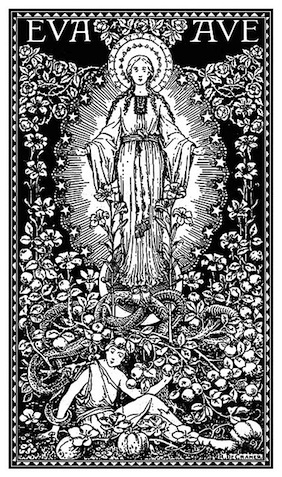
Today we celebrate the “Dormition of the Mother of God”, or the “Falling asleep of the Blessed Virgin Mary” older titles for the feast more commonly known now as “the Assumption”. Fortunately our recent reflections may help us to understand the significance of this feast and that other title of Mary, the “new Eve”.
The ultimate benefit of our salvation in Christ is the restoration of creation with God – the regaining of our corporeal immortality as God had originally intended “Let us make mankind in our image, in our likeness…” [Gen 1:26; Wisdom of Solomon 2:23] i.e. originally we were intended to enjoy the eternal nature of God with Him as created corporeal beings. Indeed, God created us intending us to be family to/with Him [cf Isaiah 43:7] to share His glory. Through Adam and Eve’s fall, humanity lost its corporeal immortality, “for dust you are and to dust you will return.” [Gen 3:19] How did this happen?
God told Adam and Eve; “You are free to eat from any tree in the garden; but you must not eat from the tree of the knowledge of good and evil, for when you eat from it you will certainly die.” [Gen 2:16-17] However, after they ate the forbidden fruit, they did not immediately fall dead! Many Christians interpret this seeming discrepancy i.e. that Adam and Eve did not immediately die, to mean that they died ‘spiritually’ that day, or that having been originally immortal, became mortal at that point. However, the text suggests that when they committed the original sin [Gen 3:6], God exacted an indirect penalty of death upon Adam and Eve. If the garden of Eden story is representative of history, humans were created to live forever in a physical body, but God removed their source of immortality on the day they sinned against Him…
In addition to the Tree of Knowledge of Good and Evil, God also placed a tree in the garden called the Tree of Life [Gen 2:9]. If Adam and Eve had eaten of this tree before they sinned, they would’ve realise the immortality God desired for humanity. Upon eating of the Tree of Good and Evil, God immediately removed Adam and Eve from the garden, and placed a flaming sword to guard the tree so they could not eat from it [Gen 1:22], “…therefore the LORD God sent him forth from the garden of Eden”, clearly indicating that Adam was removed from the garden before he would have the opportunity to eat of the Tree of Life and become immortal. This suggests that God didn’t want them to be sinful and immortal!
On the day Adam and Eve ate of the Tree of Knowledge they missed out on the opportunity of immortality because God removed their access to the Tree of Life which had been placed there for them, and without the essential elements the fruit was to provide we likewise all die, “For as in Adam all die,…” [1 Cor 15:22] So it was through disobedience that the knowledge of good and evil was wrought. Eve was deceived by the serpent who contradicted what God had said, the serpent said, “You will not certainly die,” [Gen 3:4] where God had said, “…you will certainly die.” [Gen 2:16-17] Clearly the deceptive serpent was lying; the serpent of course being the Devil – the first among the angels who turned away from God [topic for another post].
Now, some erroneously suggest that “the blame” or “guilt” was all Eve’s i.e. the woman’s; afterall, she it was who was gave in first to the Devil’s temptation and disobeyed God’s command and tempted Adam to the same. However, St Paul says, “For as in Adam all die…” because through their cooperation in disobedience, the fault was shared. Indeed, the curse spoken by God to the woman included subjugation to man, “I will make your pains in childbearing very severe; with painful labour you will give birth to children. Your desire will be for your husband, and he will rule over you.” [Gen 3:16] The egalitarianism of contemporary society of course would probably take exception to this notion! However, notice that actually there is parity, even complementarity for the expulsion from the Garden of Eden is shared by them both, man and woman and man is equally cursed, to toil and labour for food [cf Gen 3:17-19] and what is more, it is upon the man that the ultimate curse is placed for all of mankind “for dust you are and to dust you will return.” The curse of mortality is borne by Adam through it being born of Eve.
Now “Eve” was the name given by Adam to woman, “Adam named his wife Eve, because she would become the mother of all the living.” [Gen 3:20] Before the Fall she was known simply as “woman” (ishah אשה); when they were expelled he called her, Eve which as is common with most names has a meaning, “life” (chavah חַוָּה, “live [giving]”) as indeed Adam means “the man” i.e. humanity (ha-adam אָדָם“the earthling”). As humanity, together they were condemned, “And the Lord God said, “The man has now become like one of us, knowing good and evil. He must not be allowed to reach out his hand and take also from the tree of life and eat, and live forever.” [Gen 3:22] Here the text makes plain that, had they not disobeyed God they might have eaten of the Tree of Life which fruit had not been forbidden them and God’s original desire might have been fulfilled.
So how is Our Lady the “new Eve”? Let’s not focus straight away on the element of sin, but of life. Just as Eve became the mother of humanity through the circumstances of the Fall, so Mary became the mother of salvation for humanity through the circumstances of the Incarnation. For as the mother of Christ the “new Adam” [1 Cor. 15.45], she became herself the “new Eve”. Before the Fall, Adam simply referred to Eve as “Woman”. However, after the Fall, Adam names his wife Eve, because she is the “mother of all living.” Notice that Our Lord never refers to Our Lady as “Mary” or even “Mother,” but always refers to her as “Woman” [John 2:1]. The most significant occasion on which He calls her “Woman” was during His crucifixion when He gives her to John (the Church) as “Mother” [John 19:26, 27].
Notice that Christ refers relationally to His Mother as “Woman,” which recalls Adam’s pre-Fall title for Eve, but when He refers to the Apostle’s relationship with Our Lady He uses the title “Mother.” Tradition tells us that John took Our Lady into his home in Ephesus and cared for her until her dormition (falling asleep). Christ called the disciples “brothers,” he told them that God was their “Father,” and he gave Mary to them as their “Mother.”
So as Eve was the mother of mortal life, so Mary as the “new Eve” is mother of immortal life… Just as through Adam came death, so in Christ the “new Adam” comes eternal life, reconciliation with God forever; the fruit of the Tree of the Cross is the fruit of the Tree of Life… (more to follow)…
Sancta Dei Genitrix, Mater omnium credentium, ora pro nobis!
A.M.D.G. Quarta die infra Octavam S. Laurentii Commemoratio: Ss. Hippoliti et Cassiani Martyrum
Carissimi,
Yesterday’s reflection ended with the conclusion that the ministerial priesthood of the New Covenant replaces that of the Old Covenant, not to offer ritualistic sacrifices but to offer “the” ultimate atoning Sacrifice of Calvary through the high priesthood of Christ to receive here in our contemporary time, the fruits of His redeeming sacrifice, the Eucharist. It is important to emphasise and remember here that the Church has never suggested that the Mass is a repetition of Calvary – it is not, it is a witnessing again, irrespective of time and place of that same, single, “once only once and once for all” Sacrifice of Calvary. It is a re-presentation, a renewal of the effects, the benefits, the merits, the fruit, of that “one and the same” historical event i.e. the atonement for sin, the restoration of creation and the confection of the Eucharist, the means of eternal life.
The difference between Calvary and the Mass are the external accidentals, i.e. the manner of the oblation of the one and the other “sola offerendi ratione diversa” [Council of Trent]. On the Cross, Christ offered His incarnated physical self, there His blood flowed from His crucified body; on the Altar He offers His death already suffered, but now in an unbloody manner, Christ does not die again on the Altar. Thus the Mass represents this past event i.e. Calvary: but it is one with the sacrifice of the Cross as the victim and the priest are the same i.e Christ, but it is not literally the Crucifixion. The late Bishop Michael Evans wrote, “The word “memorial” is very important in Eucharistic theology, and means far more than simply a recalling or remembering. For the Jews, celebrating a memorial involves evoking the past and reliving it in such a way that a past event is made effective and fruitful here and now.” [Is Jesus really present in the Eucharist?] We needs must be careful with such notions however, to make clear that the efficacy of the Mass itself is not diminished by our concept of “memorial”. The Mass itself is a sacrifice, by which the infinite merits of Christ’s death, gained on the Cross, are applied to souls here-and-now.
The Mass is a literal visible sacrifice, which represents and ‘applies the merits’ of the literal, once-for-all sacrifice of the Cross. In other words, the Mass is itself a sacrificial offering of worship i.e. of adoration, thanksgiving, prayer and expiation by the created to the Creator in fulfilment of the Law “to love God” [Deut. 6:4-5; Levit. 19:18; Matt 22:35–40; Mark 12:28–34; Luke 10:25-28], joined to the commemoration or “showing forth” [1 Cor. 11:26] of the Sacrifice of Christ upon Calvary – the purest offering of adoration, thanksgiving, prayer and atonement by and at the behest of the great high priest who instituted and commanded His Apostles so to do “in mei memóriam faciétis” [Luke 22: 19]. The twofold consecration of the bread and then the wine, “show forth” the physical death of Christ by the separation of His body from His blood shed upon the Cross. Uniting the worship of God to the commemoration of the Cross, manifests the ultimate act of offering to God by humanity [Heb 2:17] as God made-man [Matt. 1:22-23], by God made-man in Christ’s voluntary offering and outpouring of love toward God [Heb 9:12] and neighbour [John 15:13 ditto references to the Greatest Commandment above]. In this way it may be said that the “fulfilment of the Law and of the Prophets” [Matt 5:17] is fulfilled in Christ, by His saving sacrificial act of love (kenosis – self-emptying) on the Cross.
As the Council of Trent defined in its 22nd Session, Canon III: “If any one saith, that the sacrifice of the mass is only a sacrifice of praise and of thanksgiving; or, that it is a bare commemoration of the sacrifice consummated on the cross, but not a propitiatory sacrifice; or, that it profits him only who receives; and that it ought not to be offered for the living and the dead for sins, pains, satisfactions, and other necessities; let him be anathema.”
As noted above, the “ends of the Mass” i.e. the purposes for which it is offered, are to adore God – adoration, to give Him thanks – thanksgiving, to make satisfaction for sin – atonement and to ask for new graces – petition, the ends for which Christ died upon the Cross. Worship, or adoration of course, is a sign of our dependence upon our Creator and His absolute dominion over us, His creatures. It was the effect of Original Sin that repudiated this reliance and subjection of humanity to God; all this has been restored by Christ on the Cross in His ultimate act of adoration and thanksgiving. We experience this restoration of humanity with God through our Baptism and actualise it through our individual receipt of the Eucharist. But of these four purposes of the Mass only two are directly beneficial to the whole Church; the satisfaction for sin and the petition of new graces; it is these that are usually meant as “the fruit” of the Mass.
As an old Manual of Devotion says; Without God’s holy grace we cannot perform one supernatural act, nor conceive one good thought, nor advance one step on the road that leads to life everlasting. “Without me,” says Christ, “you can do nothing.” [John 15:5] And St. Paul adds: “Not that we are competent in ourselves to claim anything for ourselves, but our competence comes from God.” [2 Cor 3:5]
Our wants, temporal and eternal, are countless: graces to repent of our many sins; graces to sin no more; graces to live to love and die in His friendship; the grace for final perseverance. In the Holy Sacrifice of the Mass Jesus obtains all for us. On our Altars, where His death and passion are represented and renewed, Jesus obtains of His father all graces and blessings we need for soul and body. Jesus is the “beloved Son, in whom the Father is well pleased” [Matt 3:17] and “is heard on account of his own reverence.” [Heb. 5:7] In the Holy Mass, Jesus Himself is our advocate as well as our high priest. He presents our wants and petitions to His Father, and with the petitions His Precious Blood as a price to obtain them. The Church ends every prayer, and asks everything, “through our Lord Jesus Christ,” because of Jesus we have everything. “He who did not spare his own Son, but gave him up for us all – how will he not also, along with him, graciously give us all things?” [Rom. 8:32] St. Jerome says: “Assuredly the Lord grants all the favours for which we petition Him in the Mass, provided they be suitable to us; and, what is far more admirable, He very often grants us that for which we do not petition Him, provided we place no obstacle to His holy designs.”
So these graces are called the fruit of the Mass and are applied generally in a threefold division:
The General Fruit – that is the benefit for the whole Church – Militant (on earth), Expectant (waiting judgement) and even Triumphant (the blessed saints). This fruit is in union with Our Lord’s self-oblation for all mankind and the celebrant obviously cannot alter or direct it.
The Special Fruit – also called the “ministerial fruit”, that the benefit to those who in any way cooperate in offering the particular Mass; this it is which, in the application of the priest’s intention, is primarily and mainly operative (i.e. for another person).
The Most Special Fruit – that is the personal share of the celebrating priest as being Christ the offerer of the Sacrifice. Though this fruit, being personal to the celebrant, cannot be alienated and applied to others he may apply it for the acquisition of some grace of which he himself stands in need.
A.M.D.G. Tertia die infra Octavam S. Laurentii Commemoratio: S. Clarae Virginis
Carissimi,
Saint Lawrence being ordained (sub)deacon by Pope Saint Sixtus II (Blessed Fra Angelico)
Sacrifice… St Lawrence, whom we celebrate this week with an Octave, gives us another insight ref the incarnational aspect of the priesthood and indeed of the Apostolic sharing of the “bitter cup”.
St Ambrose of Milan says that Lawrence met His Holiness Sixtus II on his way to his execution. “Where are you going, my dear father, without your son? Where are you hurrying off to, holy priest, without your deacon? Before you never mounted the altar of sacrifice without your servant, and now you wish to do it without me?” Of course, Pope Sixtus was not on his way to offer Mass, Lawrence was referring to his execution… Lawrence was expressing the sharing by Sixtus in that “bitter cup” the “cup of salvation”, the “cup of trembling” and the “cup of wrath” [as discussed previously here], the Pope was about to “taste death” literally sharing in the sacrifice of Christ, for Christ by his martyrdom. Depicted in Fra Angelico’s painting is the presentation at Lawrence’s subdiaconal ordination of Pope Sixtus presenting “the cup”, a chalice and paten, signifying the invitation to share through major Orders, the Apostolic ministry and thereby the mystery of Christ’s high priesthood upon the Cross.
So now finally(!) we come to something of a conclusion ref our recent reflections. We’ve discussed something of the nature and character of the priesthood – the first obligation of the priest to be a Christian at prayer, walking daily with God pursuing personal holiness and sanctification, interceding through prayer on behalf of God’s people, most especially the Church through the recitation of the Divine Office. We’ve reflected on the true nature of humanity in the created order, that we are “body, soul and spirit” and that God works through His creation salvifically and that human beings have the potential to “spiritualise the material and materialise the spiritual”, hence the establishment by God and Christ of a ministerial priesthood. Now we come to the purpose of the New Testament ministerial priesthood; the realisation of the fruit of Christ’s redemption, the Eucharist.
It is sometimes suggested that “there is no need for a priesthood” echoing some erroneously believe the sentiments of the author of Hebrews concerning the efficacy of the high priesthood of Christ, “For such a High Priest was fitting for us, who is holy, harmless, undefiled, separate from sinners, and has become higher than the heavens; who does not need daily, as those high priests, to offer up sacrifices, first for His own sins and then for the people’s, for this He did once for all when He offered up Himself.” [Heb 7:26-27] For whilst indeed, the sacrifice of Christ upon the Cross of Calvary does indeed negate the need for regular expiatory sacrifices common under the Old Covenant, even so the ministerial priesthood of the New Covenant exists for another purpose.
The ministerial priesthood of the New Covenant exists to confect and present to us the means by which we receive eternal life. Primarily, it exists to share in and offer the Eucharist, the holy sacrifice of the Mass, by participating in the high priesthood of Christ and making manifest the “flesh and blood of the Son of Man”. [John 6:53-54] “He who hears you, hears me” [Luke 10:16] Our Lord said to the Apostles, the new ministerial priesthood. For Christ makes plain that it is only in the reception of the Eucharist that the promise of eternal life and the redemption of humanity is realised, “Truly, truly, I say to you… He who eats My flesh and drinks My blood has eternal life, and I will raise him up on the last day.” By instituting the Apostolic ministry, Christ established the means by which His body and blood would be made available to the faithful. He who became one of us to save us, continues to present Himself in bread and wine through those chosen [John 6:70; John 15:16; John 13:18], consecrated [Acts 1:15-26; Acts 6:6; Acts 13:3] and set apart [Romans 15:16; 2 Corinthians 2:17; 2 Cor. 5:20] to cooperate with Him in fulfilling the promises He made when He walked among us.
So it is that we understand the ministerial priesthood of the New Covenant to be the physical, material means by which the high priesthood of Christ is effected as in like fashion, it is in the consecrated species of bread and wine that we receive His Body and Blood and thus the fruit of our redemption, the Eucharist. As St John Chrysostom wrote, “We priests are simply the instruments and ministers of the veritable sacrifice. The Lord Himself is He who sanctifies the material gifts offered for the sacrifice, and who makes them a source of sanctification for us.” “When, therefore,” he adds, “you see the sacred minister lifting up to heaven the holy offering, think not that he whom you behold is the real priest; but rising above visible objects, consider the hand of Jesus Christ stretched out invisibly. Through Him everything is done.” [Hom. 60 ad Pop. Antioch] Similarly and more plainly here St John Chrysostom explains the relationship of the contemporary priest and that sharing in the Apostles’ ministry discussed before, “I wish to add something that is plainly awe-inspiring, but do not be astonished or upset. This Sacrifice, no matter who offers it, be it Peter or Paul, is always the same as that which Christ gave His disciples and which priests now offer: The offering of today is in no way inferior to that which Christ offered, because it is not men who sanctify the offering of today; it is the same Christ who sanctified His own. For just as the words which God spoke are the very same as those which the priest now speaks, so too the oblation is the very same.” [“Homilies on the Second Epistle to Timothy,” 2,4, c. 397 A.D.]
So then, the ministerial priesthood exists to make manifest the high priesthood of Christ. “The priest who imitates that which Christ did, truly takes the place of Christ, and offers there in the Church a true and perfect sacrifice to God the Father.” [St. Cyprian wrote to the Ephesians circa 258 A.D.] The earthly and mortal priest becomes the means by which Christ Himself offers Himself as food for the faithful. It is Christ Himself who stands before the Altar, who offers Himself in the person of the priest to God, His father as the perfect victim for the propitiation of sin; Who breathes eternal life into the species of bread and wine at the words of consecration, transforming them “This is MY Body”, “This is MY Blood”; that same “logos”, that same “ruach” that breathed life into creation [Gen 1:2; John 1:1], that breathed life into man [Isa 42:5; Ezek 37:5 Job 33:4].
Thus, as St Ambrose says, “Jesus Christ is your inheritance, O ye ministers of the Lord. Jesus Christ is your sole domain. His Name is your wealth. His Name your income. His Name constitutes your stipend, a stipend not of money but of grace. Your heritage is not dried up by heat, nor devastated by storms. The sun shall not burn thee by day, neither the moon by night. Keep then the portion which you have chosen, for it is the good portion, which the possessions of the world cannot equal.”
Today is a very special feast day for me as it is the Patronal Feast of the Oratory of St John Vianney, the priestly fraternity that I belong to. It seems wholly appropriate then to continue reflecting on the priesthood as we have these past few days.
I ended yesterday by remarking how St John Vianney was an “exemplar” of the priestly vocation. Reading the life of the Curé d’Ars (as he is also known) we notice immediately his dedication to God, like Enoch he “walked with God” on a daily basis. Like Enoch he was surrounded by sinful people, yet he obeyed and trusted in God, “… he kept clear of sin, when sinful ways were easy…” [cf Sirach 31:8-11] and he achieved great things thereby, the salvation of those he served. The teachings of St John Vianney also beautifully convey the incarnational aspect of the ministerial priesthood, “If I were to meet a priest and an angel, I should salute the priest before I saluted the angel. The latter is the friend of God; but the priest holds His place.” By that he means that the priest – made in the image and likeness of God unlike the angel, is also the mediator between God and Man and again unlike the angel, has the ability to present God incarnate in the holy Eucharist. “See the power of the priest; out of a piece of bread the word of a priest makes a God. It is more than creating the world.” For those thinking this is “blasphemous” understand that a more humble man you could not have met than the Curé and allow me to explain further what he means…
I remarked to someone once expressing this incarnational teaching of the Curé another way, “If you had the choice, if the Curé himself were to appear here and I were here to hear your confession, who would you go to?” The reply, “The Curé!” “Ah,” I replied, “but the Curé would not be able to give you absolution.” Back came the stunned response, “Why not?” “Because he is dead. I am alive!” Despite all the holiness of the Curé, despite the fact that he is a Saint, he would be unable to impart God’s absolution because he is not alive! Only in this physical existence can the promise of God’s absolution promised through the Apostolic ministry [cf John 20:19-23] be realised. This simple truth is the same even for us to receive the ultimate benefit of our salvation eternal life, i.e. the Eucharist, for only “He who eats My flesh and drinks My blood has eternal life, and I will raise him up on the last day.” [cf John 6:53-54] St John Vianney again, “When the priest remits sins, he does not say, “God pardons you”; he says, “I absolve you.” At the Consecration, he does not say, “This is the Body of Our Lord;” he says, “This is My Body.”
As we noted yesterday, God works through His creation to restore it, hence why God became Man in Christ. In like fashion then, the high priesthood of Christ works through the ministerial priesthood of the New Covenant, just as under the Old Covenant the means of atonement worked through the ministerial priesthood of the Sons of Levi. The difference is, that whereas before the priesthood was patrilineal i.e. descended from a particular tribe of the chosen people of Israel, the sons of Aaron in the tribe of Levi [cf Exodus 28:1-4; Numbers 25:13], now the priesthood is called out of those who have been freed from sin, who have become by adoption “children of God” [John 1:12, 13] and have been “chosen” [John 15:16].
Obviously, as before, the stewards of God’s mysteries must themselves strive after holiness, hence the first obligation to pray – to achieve personal sanctity by walking with God, by living out a relationship with Him, by discerning His will and by offering intercession for those He loves. But how is this possible for mere men? Here we must understand our own place in the created order. Remember that we are made in the “image and likeness of God” [cf Genesis 1:26, 27], what does this mean?
In Genesis 2:7 “Jehovah God formed man with the dust of the ground.” With this act, God created man’s body. The verse continues, “And breathed into his nostrils the breath of life.” “Breath” is derived from the Hebrew word neshamah which, significantly, is translated “spirit” in Proverbs 20:27: “The spirit [neshamah] of man is the lamp of Jehovah.” We can thus infer, that God’s breathing into man the breath of life produced man’s spirit. Zechariah 12:1 corroborates the creation of man’s spirit by telling us that just as Jehovah stretched forth the heavens and laid the foundation of the earth, He also formed the spirit of man within him. Genesis 2:7 concludes “And man became a living soul.” The soul (man’s intrinsic person) was the issue of the breath of God entering into the nostrils of the body of dust. The biblical record of the three-step creation of man clearly reveals him to be tripartite. Hebrews 4:12 “The word of God is living and operative and sharper than any two-edged sword, and piercing even to the dividing of soul and spirit and of joints and marrow.”
Paul similarly describes that which makes us human, “I pray to God that your whole spirit and soul and body may be made blameless until the coming of Our Lord Jesus Christ.” [1 Thess 5:23] Here The “spirit” is the highest part of man, that which assimilates him to God; renders him capable of religion, and susceptible of being acted upon by the Spirit of God. The “soul” is the inferior part of his mental nature, the seat of the passions and desires, of the natural propensities. The “body” is the corporeal frame. In other words, we are made up of our physical bodies, our soul (psyche) is what interprets our sense sensations experienced by our bodies and our spirit is that which makes us alive and aware and enables us to rationalise above our senses; the spirit is what makes us of God who is Spirit. Essentially then we are “tripartite” beings i.e. spirit, soul, and body in order to enable us to contact and live within the spiritual, psychological and physical realms, respectively.
Firstly, with his human spirit, man can worship God, serve God, and know God intuitively. Second, the soul is that part which forms the personality of man and enables him to contact and function within the psychological realm. Finally, the physical body with its five senses enables man to relate to and communicate with the physical world. In our own time “soul” and “spirit” have become regarded as interchangeable, understandable in the sense that neither seem sense perceptible or rather physically experiential. But the fact that we are able to interpret what we experience through our senses betrays our soul, we might call it our “mind”, our “will”. But our spiritual intellect enables us to rationalise above our sense experience, our spiritual intuition has the capacity to know and discern apart from human reason or circumstantial experience.
With regard then to the possibility of men acting as mediators between God and men, between heaven and earth? Let us recall St John Vianney’s point above. Unlike the angels who are only spiritual beings, and animals who are only physical beings, the unique tripartite nature of man enables him to experience both spiritual and material things. Not only that, but man can effectand affect both spiritual and material things, he is imago mundi a microcosm of the universe itself, a mini-model of creation and god-like; the only other being in the universe able to manipulate the spiritual and the material world is, God. Man can spiritualise the material and materialise the spiritual. He is in every way a mediator.
If we recall the observation that St John Vianney could “read into men’s souls” we might understand that he could intuitively understand another person’s passions and lusts, he recognised the predilections that were preventing them from developing their spiritual intellect and he became famous for accurate diagnosis betrayed by the penances and spiritual direction that he gave those who sought him out (20’000 pilgrims per annum by the time of his death). Here the Curé demonstrates what can be achieved by a man completely self-aware to all that he is as God created him. Who pursues holiness of life by walking daily with God, a man of prayer uniting his will with God’s in the discernment of God’s will and purpose for his life. A man who can be truly a mediator between God and men, communicating with both and enabling the latter to realise for themselves all that God desires them to be. “The priest is not a priest for himself; he does not give himself absolution; he does not administer the Sacraments to himself. He is not for himself, he is for you.” Curé d’Ars
I remarked before how the priesthood is in danger from the process of emasculation that is currently prevalent in all areas of the Church. Through the contemporary mindset that confuses soul and spirit as one and interchangeable, humanity is losing sight and realisation of itself. “Me, myself and I” the motto of the ego is left to interpret everything subjectively, employing only the bodily senses to make sense of the world, regarding only physical empirical evidence as “proof”. The spirit is still visible though, the realisation of spiritual intellect is still discernible in forms of art, music, painting and even in science and technology, in the materialisation of ideas onto paper into buildings and physical structures… but no more is this recognised as “of the spirit” but simply of the “soul” driven by passions and lusts and sensuality. Even higher aspirations such as “equality” are driven by the selfish desire of souls wanting to give freedom to the expression of their passions, which is why objective reason and debate are no more and subjective reasoning and impassioned belligerency are the modus operandi of campaigners.
Within the Church itself, this confusion has resulted in a situation where few are properly catechised and have been left to the “whims and fancies” of new doctrines derived from secular ideologies and principles that are in fact fundamentally at odds with the very nature of the created order itself. As Paul prophesied, “For the time will come when people will not put up with sound doctrine. Instead, to suit their own desires, they will gather around them a great number of teachers to say what their itching ears want to hear. They will turn their ears away from the truth and turn aside to myths.” [2 Tim 4:3-4] Through the general propensity of contemporary theologians jettisoning the wisdom of past ages to replace it with their own subjective hypothesises attempting to blend the Gospel with the fast-paced Zeitgeist of the secular world, Christianity itself is losing sight of the true reality of the created order. Ironically, in an attempt to appeal to the souls of men, they have compromised the awareness of spiritual intellect! As a result the same is true of spiritual directors, theology schools and most of the institutions responsible for the formation of priests.
To concludes today’s reflection, a sage quote from the Curé, “When people wish to destroy religion, they begin by attacking the priest, because where there is no longer any priest there is no sacrifice, and where there is no longer any sacrifice there is no religion.” Sadly, in part deliberately, in part through ignorance, the contemporary Church is realising this end as people forget what their own true nature is about, so vocations of all kinds are impoverished and the priesthood affected… (more soon…)
Continuing my reflections from my retreat… Yesterday I reflected on how the invitation by Christ to the Apostles, “…Are you able to drink the cup that I drink…?” [Mark 10:35-40; Matthew 20:20-23] is shared by bishops in the continuation of that same Apostolic ministry, and in turn is asked by them of those about to be ordained priests. Then I remarked how the true nature of priesthood is masked today by a lack of understanding generally about its character and purpose, such that many are in fact emasculating it and in so doing distorting God’s will and purpose for many in the realisation of other vocations.
The first question I ask most candidates for priesthood is, “What is the first duty of the priest?” By which I mean, what is his purpose, what is his first obligation? The answer is always “to offer the holy sacrifice of the Mass” often accompanied with a smile or sometimes a quizzical look as if the question is odd! “No,” I always reply, “the first duty of the priest is to pray. It is the same for any Christian.” For a priest is a “mediator” between God and human beings, he is one who offers sacrifices and intercedes for the people. The first of the Ten Commandments is “You shall have no other gods before me” [Exodus 20:3; Deuteronomy 5:7] and of the Summary of the Law, Our Lord says “Love the Lord your God with all your heart and with all your soul and with all your mind and with all your strength.” [Mark 12:30; Matthew 22:37; Luke 10:27] So it is then that the priest in fulfilment of the Law needs must express obedience to this command if he is to be an effective mediator with God, “But without faith it is impossible to please Him, for he who comes to God must believe that He is, and that He is a rewarder of those who diligently seek Him.” [Heb 11:6] The priest must offer in true charity first that worship of almighty God that is the chief expression of recognising God as the source and summit of all our being, a sacrifice of prayer and praise to the Divine, to Him “from whom all good things come.” [cf James 1:17]
Now notice the statement “must believe that He is” it means of a stronger faith than the mere assent to God’s existence. This statement in verse 6 follows on the heels of an illustration in Genesis regarding Enoch. Only a short sentence, “Enoch walked faithfully with God,” in Genesis 5:22 and repeated in Genesis 5:24 reveals why he was so special to his God. For God was an every day reality to him. It is the kind of faith that those who have it will seek God out. That is the kind of faith that Enoch had. People who really believe that “God is”, they seek Him out. They search Him out. That has to include talking to Him. The priest has to truly believe in and walk with, God.
So “seeking God” means that one approaches nearer to God, seeks Him, or he walks with Him. It signifies fellowship with Him. The Bible shows three stages of coming to God. The first is at God’s calling when one begins to draw near. It results in justification and the imputing of Christ’s righteousness. It occurs when one discerns and answers both the general call of God i.e. to humanity to have a relationship with Him, and the particular calling of God i.e. the fulfilment of His will and purpose and the raison d’être of the specific individual. The second is more continuous, occurring during sanctification, as a person seeks to be like God, conform to His image, and have His laws written, engraved, into his character. This is expressed by the committing of oneself to the ongoing discernment of His will and purpose. The third stage occurs at the general resurrection of the dead when the individual is glorified. The whole point of the preceding process, i.e. to become holy, to become transfigured, to become worthy of eternal life with God.
It is for this reason that the Church binds upon all her Sacred Ministers in major Orders the obligation to recite the Divine Office or “Prayer of the Church” to sanctify the day and all human activity. Why? From all eternity the Godhead was praised with ineffable praise by the Trinity itself, the three divine Persons as an expression of true and Divine Charity. From the first moment of creation the choirs of angels sang God’s praises, “Holy, holy, holy is the Lord of hosts; the whole earth is full of his glory.” [Isaias 6: 3]. Adam and Eve had “created in them the knowledge of the Spirit of God that they might praise the name which He has sanctified and glory in His wondrous acts” [Ecclesiasticus 17: 6-8] So then, a priest who loves God with all his heart, soul, mind and strength will be first and foremost a man of prayer, he will walk daily with God, he will offer prayer not only for himself as an expression of his own faith but also on behalf of those he is called to serve in emulation of Christ Himself.
As Fr E Quigley writes in his study of the Roman Breviary, “The Divine Office”: ‘In the New Law our Saviour is the model of prayer, the true adorer of His Father. He alone can truly worthily adore and praise because He alone has the necessary perfection. Night and day He set example to His followers. He warned them to watch and pray; He taught them how to pray; He gave them a form of prayer; He prayed in life and at death. His apostles, trained in the practices of the synagogue, were perfected by the example and the exhortations of Christ. This teaching and example are shown in effect when the assembled apostles were “at the third hour of the day” praying [Acts 2: 15]; when about the sixth hour Peter went to pray [Acts 10: 9]. In the Acts of Apostles we see how Peter and John went at the ninth hour to the temple to pray. St. Paul in prison sang God’s praises at midnight, and he insists on his converts singing in their assembly psalms and hymns [Eph 5: 19; Col. 3: 16; I Cor. 14: 26].’
Now most people appreciate that a priest therefore should be “a man of prayer” but key to understanding the particular role and purpose of the priesthood requires us to be familiar with the Old Covenant, for Our Lord says “Do not think that I have come to abolish the Law or the Prophets; I have not come to abolish them but to fulfil them.” [Matt 5:17] Now remember that we lost our corporeal immortality which God had first intended for us when He made the world, through the disobedience of Adam and Eve and so sin necessitates our salvation and affects our reconciliation with God. When we say “the resurrection of the body” in the Creed we are expressing the desire for complete reconciliation with God, the restoration of creation with Him, so that we may regain that corporeal immortality originally intended for us.
In the Old Testament, God institutes both a general priesthood and a ministerial priesthood; God made his people “a kingdom of priests and a holy nation,” [Ex 19:6; cf. Isa 61:6] and within the twelve tribes of Israel, the tribe of Levi was chosen to be set apart for the liturgical service of offering sacrifice as priests [cf. Num 1:48-53; Josh 13:33]. The ancient Jewish priesthood which functioned at the temple in Jerusalem offered animal sacrifices at various times throughout the year for a variety of reasons, but in every generation, one priest would be singled out to perform the functions of the high priest (Hebrew kohen gadol). His primary task was the Day of Atonement (Yom Kippur) service, its central themes are atonement and repentance. The Other unique task of the high priest included the offering of a daily meal sacrifice.
God promised on the Day of Atonement to cleanse His people from all of their sins. It is this distinguishing feature that made this Day unique. “For on this Day atonement shall be made for you to cleanse you of all your sins; you shall be clean before the LORD” [Leviticus 16:30]. God had redeemed His people; He subsequently required them to be cleansed from their sin. Leviticus 16 describes the most complex yearly ritual for the purification and riddance of sin in all of Scripture. On this day referred to in Leviticus 16:30 God permitted Israel’s high priest to enter into the Holy of Holies. He allowed entrance into His holy presence only one day during the calendar year. If anyone other than the high priest entered, or if anyone attempted to enter His immediate presence at any other time, they were killed as in the case of Nadab and Abihu, the sons of Aaron. [Leviticus 16:1 refers to the incident in Leviticus 10:1-7]
In the New Testament, we find Peter referring to a priesthood of all believers, “But you are a chosen people, a royal priesthood, a holy nation, God’s special possession, that you may declare the praises of him who called you out of darkness into his wonderful light.” [1 Peter 2:9] We also find Paul describes those enjoined in the Apostles’ ministry, “… as servants of Christ and as those entrusted with the mysteries God has revealed.” [1 Cor 4:1] So here we see by comparison the fulfilment of the old Law of the Old Covenant in the New… So what of the high priest and the “Day of Atonement”? Here of course we come to the very crux of our faith, Our Saviour, Jesus Christ, who is the Eternal High Priest who offered Himself on the Cross as the true Paschal Lamb and Unblemished Victim for our redemption in one atoning sacrifice of Himself upon the Cross; on “The” Day of Atonement. The New Testament depicts Jesus as the “great high priest” of the New Covenant who, instead of offering the ritual animal sacrifices prescribed by the Jewish Law, offers Himself on the cross as the true and perfect atoning sacrifice.
So then, the New Testament says that as high priest, Jesus has made the Church “a kingdom of priests for his God and Father.” [Rev 1:6; cf. Rev 5:9-10; 1 Pet 2:5,9] All who are baptised are given a share in the priesthood of Christ; that is, they are conformed to Christ and made capable of offering true worship and praise to God as Christians “to offer up spiritual sacrifices” [1 Peter 2:5]. “The whole community of believers is, as such, priestly.” [Catechism of the Catholic Church #1546] So then the ministerial priesthood is properly understood to be at the service of the ‘priesthood of all believers’. As St Gregory the Great might put it, speaking as he was of his own ministry as a bishop, to be a “servant of the servants of God”. To be “stewards of the mysteries” and ultimately to both represent Christ and re-present Him in His atoning sacrifice, the Eucharist.
Remembering then that our faith is ultimately about the forgiveness of sin, so that we might have eternal life with God, let us recall how the fruits of Christ’s redemption are to be realised. How are we to receive the eternal life, won for us by Him? How, especially when our high priest has “passed into the heavens” Hebrews [4:14]? It is of course at this point that the need for a ministerial priesthood becomes evident. “So Jesus said to them, “Truly, truly, I say to you, unless you eat the flesh of the Son of Man and drink His blood, you have no life in yourselves.” He who eats My flesh and drinks My blood has eternal life, and I will raise him up on the last day.” [John 6:53-54] The ultimate benefit of our salvation in Christ is the restoration of creation with God – the regaining of our corporeal immortality as God had originally intended. We see how our faith is “incarnational” – God made Man in Christ restores the physical material creation to the Creator by atoning completely for sin which had prevented the realisation of God’s desire for us, to be with Him for eternity. How then are we to receive eternal life except by incarnational means!
So it is then that, that as before, God uses His creation to effect His supreme love for us and desire for us to be with Him forever. Here then is where the ministerial priesthood of the New Covenant comes in. In order for the words of Christ to be made true [cf John 6:53] we need to receive as physical persons that physical reality of the Eucharist, of the flesh and blood of the Son of Man. The Catholic priesthood then is a share in the priesthood of Christ and traces its historical origins to the Twelve Apostles appointed by Christ at the Last Supper who were commanded to “do this in memory of me.”
Tomorrow is the feast of St John Vianney, a more perfect example of priestly dedication and service by a man we would be hard pushed to find, one who understood intimately this incarnational need for the ministerial priesthood…